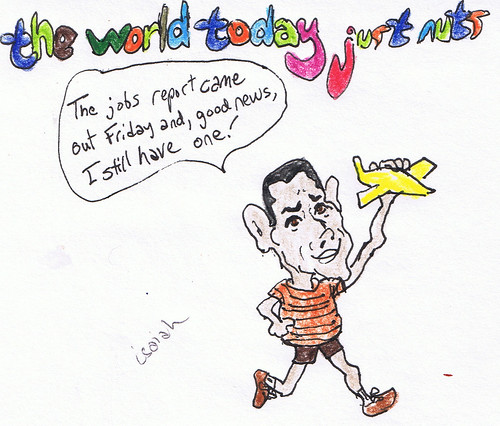
Tuesday, November 08, 2011

UFOs Chuck

Tuesday. NBC still hasn't posted Friday's episode of Chuck. I'm tired of it. I may be ending my Chuck coverage. I'm just not in the mood for this crap.

POLITICO had an interesting story by Leigh Munsil about people who posted a petition at the White House site online and got enough signatures to force a kind-of reply
:

“The U.S. government has no evidence that any life exists outside our planet, or that an extraterrestrial presence has contacted or engaged any member of the human race,” the White House said in response to the petitions, submitted on the administration’s new public arena that gives the public the chance to earn a reply if enough people sign on to support it.

But Paradigm Research Group, an advocacy group responsible for one of the petitions, issued a response on Tuesday, calling it "unacceptable."

The group says the White House’s response is either a political lie, a national security lie, demonstrates that the executive branch is unaware of extraterrestrial life, or that the " statement is correct and the aforementioned accumulation of evidence is just a sixty year, worldwide misunderstanding."

Where do I stand on the whole issue?

I don't obsess over it; however, I think, mathematically, it would be surprising if we were the only life form in the world.

Now back to Chuck. I don't mind you e-mailing me about it but remember, I don't write the show, I don't produce the show, I don't air the show.

If you're frustrated that you can't watch last Friday's show (and a number of you are) I understand because I am too. And I'm so frustrated I really think I may walk away from it.


Here's C.I.'s "Iraq snapshot:"

November 8, 2011. Chaos and violence continue, the Turkish military wants the peshmerga to fight the PKK, Nouri and his power grab, a Senate hearing that makes it clear Iraq and Iraqis just don't matter, and more.
We'll start by dropping back to last Wednesday when the Senate's Foreign Relations Subcommittee on International Operations and Organizations, Human Rights, Democracy, and Global Women's Issues held a joint-hearing with the Subcommittee on Near Eastern and South and Central Asian Affairs. Senators Barbara Boxer and Bob Casey co-chaired the hearing. Senator Jim DeMint was the Ranking Member. What stood out the most?
How important Hillary Clinton's work on women's issue in the 90s was.
Dismissed, attacked and belittled in the 2008 Democratic Party primaries, even Barbara Boxer had to acknowledge the work when introducing witness Melanne Verveer who worked with Hillary on women's rights while Hillary was First Lady. So much heavy lifting did Hillary do during that period that even Republican Senator Jim DeMint had to acknowledge her and quote her ("Women's rights are human rights."). Hillary created a benchmark which can still be used as a benchmark.
Subcommittee Chair Barbara Boxer: But I want to talk about why we thought this was a very timely and important hearing and, from the attendance here, I think we were right. In December 2010, the world turned its attention to Tunisia after a young street vendor set himself on fire to protest the government's unjust treatment of the Tunisian people. His actions and his subsequent death sparked widespread protests and within weeks the government fell. Since then we have seen dictators toppled in Egypt and Libya and anti-government protests erupt from Syria to Yemen. And, in each of these countries, we've seen women fighting for change -- whether it was the young female students marching in Tahrir Square or the women in Yemen who took to the streets in their veils in a sign of defiance. These women have much at risk and their courage has inspired women around the world.
Ambassador Melanne Verver noted Mahnaz Afkhami "was the minister for women in Iran at the time of the revolution and as she was mentioning nobody thought that revolution was going to create the theocracy and the kind of Iran that exists today."
Appearing as witnesses at the hearing were five women. As already noted, Melanne Verveer was one. She's the US Ambassador-at-Large for Global Women's Issue. The State Dept's Deputy Assistant Secretary for Near Eastern Affairs and Deputy Special Coordinator for Middle East Transitions, Dr. Tamara Wittes and Verveer made up the first panel. The second panel was Women's Learning Partnership's president Mahnaz Afkhami, Freedom's president and CEO Sandra Bunn-Livingstone and a name this community is already familiar with: Manal Omar. She is the United States Institute of Peace's Director of Iraq, Iran and North Africa Programs.
We know Manal Omar's work from interviews and speeches she's given and most of all from her book Barefoot in Baghdad: A Story of Identity -- My Own and What it Means to be a Woman in Chaos which we've noted here many times and which, at Third, we picked as one of the ten most important books of the last ten years. And since our Iraq is our focus, that's who we would emphasize, right?
Wrong. She had no interest in Iraq -- it rated a fleeting single sentence mention and that was when it was lumped in with other countries. Oh well, at least she got a book out of the country, right? In fairness to her, none of the senators demonstrated interest in Iraq either.
Considerable time was spent by Senator DeMint addressing religious freedom in the Middle East. He and Bunn-Livingstone were very interested, for example, in the targeting of Christians in Egypt. Apparently Iraqi Christians can just rot in the hell the US government has created for them?
Joining them in that US created hell will be not just Iraqi Christian women but all Iraqi women. I asked a senator (not named above) who briefly participated in the nonsense hearing how in the world this hearing takes place with no recognition or acknowledgement of Iraq and was told (this is a direct quote), "Come on, you know we don't want to face what we've done to that country." Exactly.
Another senator (who is named above) told me after the hearing that Iraq "isn't really part of the Arab spring." And Libya is? Seriously? That was civil protestors conducting aerial night bombings of Tripoli? As for Iraq and the Arab Spring, of course that got avoided. No way in the world is the US Senate ready to get honest about that.
Nouri ordered protesters attacked, you may remember. The US government looked the other way. February 25th, Nouri ordered the press assaulted. The US government looked the other way. Nouri spied on protesters via electronic devices that track cell phones and internet use. The US government didn't look the other way. No, the US government sold a would-be Saddam Hussein that equipment. Nouri demonized the protesters, in speech after speech, as "Ba'athists." The US government looked the other way. Hadi Mehdi -- journalist, activist and critic of Nouri -- is murdered in his own home and Nouri's security forces are the chief suspect. The US government looked the other way.
And it was cute to watch as the US Senate endorsed that response (looking the other way) by refusing to address Iraq in the hearing. I think Gore Vidal needs to change his United States of Amnesia which was always far too kind of a description of the government's actions and motives. We're living in the United States of Denial.
And in this land, according to the Department of Justice Statistics reported by Lynn Langton ("Women in Law Enforcement, 1987 - 2008"), women are a visible part of law enforcement:
By 2007, nearly 4,000 state police, 19,4000 sheriff's and 55,3000 local police officers were women. In 2008, across 62 reporting federal law enforcement agencies there were about 90,000 sworn officers, of whom approximately 18,200 (20%) were women. These 2007 and 2008 numbers suggest a combined total of almost 100,000 female sworn officers nationwide in federal, state, and local law enforcement agencies.
What's it like to be a police woman in Iraq? Kholoud Ramzi (niqash) answers that question in a lengthy report detailing how police women "cannot wear uniforms or badges of rank because male officers don't want to salute them." I'm remembering Barbara Boxer's encounter with the military in one hearing where she corrected the witness and informed him he could call her "Senator" because she'd earned that title. It's a shame her concern is only with what she earned and that she receives respect. Iraqi women will have to look elsewhere to find someone concerned about their right to respect and what they've earned. Ramzi reports:
Ministry of Interior official statistics indicate that there are around 600 women among the ranks of the country's police. There are also 4,150 plainclothes policewomen working in inspections -- that is, they man security checkpoints on roads and in places like offices, airports and other public areas where security is required.
Besides not being able to show their rank, most policewomen also are not allowed to wear their uniforms on the street. They arrive at work in civilian clothing, then change into uniform during the working day and then must change back into civilian clothing before leaving their place of work. This is ostensibly to keep the female officers safe. But questions arise as to whether this rule is in fact motivated by social opinions because male officers are not expected to do the same.
Sexism within the police force doesn't stop here. In Iraq, a policewoman's work is usually restricted to administrtaion or to working at a checkpoint. More physical or dangerous activity outside of the office is left to male officers and generally there is the perception that women cannot peform these more demanding tasks.
Ramzi notes that the situation is better in the Kurdistan Regional Government where "police women can work as investigators on criminal cases and they are able to wear uniforms as well as badges of rank." Michael M. Gunter (Foreign Policy) looks at Kurdish nationalism in the Middle East and this is from his section on the Middle East:

In Iraq, of course, autonomy had already been achieved with the creation of the KRG following the Gulf War in 1991 and the KRG's constitutional recognition in 2003. However, many wonder what will happen to the KRG once remaining U.S. troops withdraw from Iraq at the end of 2011. Already the KRG and Baghdad have come perilously close to blows over Kirkuk and their disputed internal border, often referred to as "the trigger line."

Will the KRG and Baghdad begin fighting once the U.S. troops are no longer there to separate them? In addition, despite warming economic and even political relations between Turkey and the KRG, Turkey began bombing PKK militants in northern Iraq in August 2011 and then even sent troops over the border to pursue them in October. Turkey also asked the KRG for help in these efforts, even though it is clear that the KRG does not want to fight against fellow Kurds in the PKK. Iran, too, has been shelling the Kurdistan Free Life Party (PJAK) -- dissident Iranian Kurds -- entrenched just over the border in northern Iraq. How will all this play out once U.S. troops are withdrawn and both Turkey and Iran have a freer hand in intervening in northern Iraq? It remains to be seen.

Meanwhile, the Iraqi Kurds have had their own "Kurdish Spring" of sorts. First, the anti-corruption Gorran (Change) Party split the long-entrenched Patriotic Union of Kurdistan (PUK) in the KRG elections held on July 25, 2009. Subsequently, violent demonstrations broke out in Sulaymaniya on February 17, 2011, the KRG's second largest city, and continued until they were forcibly curtailed by the KRG leadership on April 19.

The Kurdistan Regional Government is a semi-autonomous region in northern Iraq. Turkey borders it from the north. The problems between the two governments start with the fact that Turkey doesn't want the KRG to exist and fears it fuels dreams and hopes for Kurds within Turkey.

The Kurds are said to be the largest ethnic minority on the globe without a homeland. Amar C. Bakshi (CNN) observes, "As way of very brief background, the Kurdish people are the largest ethnic group without a state. After World War I, when great powers careved up the Middle East, the Kurds, riven by internal strife at the time, did not get a seat at the table. In turn, they did not get a state on the map." Many groups fight for Kurdish independence. Among those are the PKK. Throughout the Iraq War, the Turkish military has bombed northern Iraq with the latest wave of attacks beginning on August 17th and they intensified last month. The Turkish government has maintained the attacks are targeting the PKK. Hurriyet Daily News reports, "During a meeting with Ankara officials on Nov. 5, Turkish officials requested [KRG President] Masoud Barzani's peshmarga forces tighten airport controls, particularly in the capital of Arbil, as the PKK often prefers to transfer money from various European countries into the region through flight routes. The Turkish side also urged Barzani's forces to heed intelligence provided by Turkey regarding such money transfers and to seize such cargo and apprehend the couriers. Officials also reportedly handed Barzani a 'red fil' that included updated information regarding the movements of the PKK's leading cadres inside northern Iraq, places they frequent and where they receive logistical support, according to daily Hurriyet." Iran's Press TV picks it up there, "Turkish media reported on Monday that the red dossier calls on Peshmerga fighters (former Kurdish resistance forces currently known as the Iraqi National Guards) to get engaged in fight against the PKK militants. The reports about the red dossier comes as Barzani, in his remarks made in Turkey, had made it clear that he was against armed clashes with the PKK, indicating the Peshmerga forces will not turn their weapons on the Kurdish militants."
Meanwhile, Alsumaria TV notes that the move by Salahuddin Province to explore semi-autonomy is leading to renewed talk that Nineveh Province should become a province for minorities. Iraqi Christians have been calling for the creation of such a province for some time now and these calls intensified following last years attack on Our Lady of Salvation Church in Baghdad.

Another province that's had talk of becoming semi-autonomous is Anbar Province whose governor Qasim al-Fahadawi was the target of an assassination attempt yesterday. Andrew E. Kramer (New York Times) notes, "Because the bomb was planted and detonated within sight of an Iraqi Army checkpoint, Sunni leaders said the attack showed the Shiite-dominated central government's disregard for their safety, or worse." Al Rafidayn adds that al-Fahadawi has accused the Iraqi military of the attempted assassination noting that the attempt took place near a military checkpoint. He declares that in the past he's been attacked by al Qaeda in Mesopotamia (he lost a leg in one such attack) and that he knows the way they operate but this one was less than 100 meters from the military checkpoint run by the Muthanna Brigade. Kramer quotes Sahwa leader Sheik Ahmed Abu Risha stating, "I accuse the Dawa Party, in collusion with the Muthanna Brigade, for trying to assassinate the governor of Anbar." Nouri al-Maliki's the leader of Dawa.

And at the Islamic Dawa Party's official website, you can contact Nouri with their "Ask The PM" section. And then there's these section "Dawa People" featuring Nouri (of course) and Imam Muhammad Bagir Al-Sadr.
Nouri is also over the Iraqi military. Muqdad Noori (Rudaw) weighs in on Nouri:


But I believe that Prime Minister Maliki has now ensured that the Americans will leave Iraq by the end of the year. The news of the American pullout came as surprise to many. Given Maliki's ambitions to rule Iraq unchallenged, however, it is likely that he has sped up the American withdrawal.
With the Americans gone, he can go about imposing the will of his own party and ruling elite and sideline by any means necessary any opponent standing in his way.
The Iranian influence on the Iraqi prime minister is undeniable. For Maliki, appeasing the Iranians -- who funded his Dawa Party for decades and have stood by him ever since -- by making sure the American troops leave Iraq, seems to matter more than the rightful demand of some Iraqis that American soldiers remain in Iraq, which may prevent new hostilities and civil war.
In his second term in office, Maliki hasn't missed a chance to show who is in charge of Iraq. He frequently ignores the Parliament and House of Representatives and does what he wants to do.

The Oman Tribune notes the move of Salaheddin Province to become semi-autonomous and Nouri's crackdown on political opponents (arresting them for allegedly being "Ba'ahtists") and quotes the International Crisis Group's Joost Hiltermann stating, "There is a severe dysfunction between the centre, Baghdad, and the provinces; and there are big tensions between the prime minister and his opponents. The two phenomena converge on provinces, which blame neglect from Baghdad on sectarian motives. The arrest campaign has reinforced this." iNewp.com adds, "People are fearing that Maliki may become another Hussein, especially as he is delaying the appointments of individuals to senior government positions that would co-lead the security forces. He is also being criticized for running the Ministry of the Interior as interim minister and the Ministry of Defense alone with a few other power holders." Though Nouri claimed and the press trumpeted in December 2010 that he would appoint ministers to head the Ministries of Defense, National Security and Interior in a matter of weeks, nearly a year later that has not happened increasing the initial assertion that he never intended to name people to the posts and that he was launching a power grab. Saturday, the New York Times editorial board served up "Prime Minister Maliki and the Sunnis:"

The authoritarian tendencies of Prime Minister Nuri Kamal al-Maliki of Iraq are well known. But the arrest of more than 600 Iraqis whom the government describes as suspected former members of Saddam Hussein's Baath Party and army is particularly cynical and reckless. With American troops scheduled to withdraw by year's end, the last thing Mr. Maliki should be doing is stoking sectarian tensions.


The Nouri-run Ministry of the Interior is in the news this morning. Aswat al-Iraq reports, "Iraq's Interior Ministry has denied that a detainee, called Kazim Munshid, has died under torture, but said he died after committing suicide in southern Iraq's Muthanna Prison, according to an Interior Ministry statement on Monday." While it is very likely that anyone trapped in what passes for a 'legal' system in Iraq might take their own life, Nouri's repeatedly getting caught running torture cells and secret prisons as well as the Iraqi security forces well known utilization of torture makes it equally likely that Kazim Munshid was tortured to death. The US government installed Nouri in 2006 and they were determined to keep him on as prime minister following the March 7, 2010 election. Reidar Visser (Gulf Analysis) reflects on how the US went about keeping Nouri:
The problem was that this and other US proposals for "intervention" only envisaged a desirable end result, i.e. a coalition of Iraqiyya, State of Law and the Kurds. They did not address or engage with the question of how their preferred nominee for prime minister, Nuri al-Maliki, would actually end up getting that position in accordance with Iraqi constitutional procedure.
When the Americans found themselves unable to square desired end games with constitutional process, instead of looking more carefully at the constitution or ideas circulating among the Iraqis at the time, they began making up the rules themselves. This included complete inventions like the strategic policy council -- designed as a consolation prize for Ayad Allawi in lieu of the premiership -- as well as a last-minute attempt to oversell him the largely symbolic presidency. Khalilzad's own preferred solution was a suggestion for splitting the premiership in two two-year terms, which again was unconstitutional and almost certain to end up with an acrimonious struggle once the first term neared expiry, if not earlier.
The disastrous outcome of these failures -- both that of the largely passive Obama administration as well as the general haplessness of the minority "hands-on" crowd that preferred the Khalilzad approach -- is the oversized, still-not-quite-seated Iraqi government of today, unable to deliver Washington the extension of the SOFA that at least the Pentagon, if not the White House, had been craving for.
What the Americans could have done instead was to listen to the Iraqi debate at the time, where ideas that could have solved the whole issue actually existed. The first step would have been the formation of a super-bloc of Maliki's State of Law and the secular Iraqiyya. This coalition could have ruled itself with a majority of about 180 deputies in parliament, or could have added the Kurds later on (the Kurds had signalled they would not be part of a greater bloc formation, so the premiership issue would have to be settled between Allawi and Maliki). The key point is that the new bloc could have agreed on a prime minister, most probably Maliki, that would not have been dependent upon the Sadrists or Iran.
In today's reported violence, Reuters notes a Ramadi roadside bombing which left four police officers injured, a Baquba roadside bombing which targeted a Sahwa leader and left him injured, a second Baquba roadside bombing which left 1 mayor injured, a third Baquba roadside bombing which targeted a judge's home (no one was hurt) and, dropping back to last night, a Baghdad roadside bombing left four people in need of medical attention.
Senator Patty Murray is the Chair of the Senate Veterans Affairs Committee and her office issued the following:


For Immediate Release

November 7, 2011
Contact:
Murray: 202-224-2834

Cantwell: 202-224-8277

McCaskill: 202-228-6502


VETERANS: Senators Murray, Cantwell, McCaskill Send Letter to GAO Urging Evaluation of VA's Center for Veterans Enterprise

Senators: As our veterans face an unprecedented rate of unemployment, Congress must continue its work fostering our nation's service-disabled veteran-owned and veteran-owned small businesses
(Washington, D.C.) -- Senate Veterans' Affairs Committee Chairman Patty Murray (D-WA) and Senators Maria Cantwell (D-WA) and Claire McCaskill (D-MO) sent a joint letter to Government Accountability Office (GAO) Comptroller Gene Dodaro about the critical need to ensure the effectiveness and efficiency of the Department of Veterans Affairs' Center for Veterans Enterprise (CVE). In 2006, to support service-disabled veteran-owned and veteran-owned small businesses, Congress created the Veterans First contracting preference program. VA was charged with implementing procedures to verify the ownership, control, and status of service-disabled veteran-owned and veteran-owned small businesses seeking to participate in Veterans First. Congress also emphasized the importance of ensuring that veterans' preferences in federal procurements are used to benefit only eligible service-disabled veteran-owned and veteran-owned small businesses. CVE began verification of service-disabled veteran-owned and veteran-owned small businesses in May, 2008. Since that time, CVE has struggled to implement an effective verification program. The letter urges the GAO to assist the CVE in developing the tools, resources and capacity necessary for an effective, timely and efficient verification process.


"Service disabled veteran-owned and veteran-owned small businesses are key partners in our economic recovery. These veteran-entrepreneurs continue to face red tape, delays and hurdles as they work to verify their businesses with CVE," said Senator Patty Murray. "After sacrificing so much to serve their country, they should not have to face such challenges when they return home. As Veterans Day approaches, there is no better time to be reminded how much we owe these brave men and women in uniform. I hope the GAO will assist CVE in identifying the changes necessary to make its verification program efficient and reliable, so that CVE can better serve these veteran-owned small businesses as they work to make America's economy strong."


"Veterans who have fought for our freedom deserve our support in their civilian lives," said Senator Maria Cantwell. "We need to make sure that returning troops have fair access to veteran small business programs that support jobs. That's why we're asking GAO to look into the process the Department of Veterans Affairs' Center for Veterans Enterprise follows for verifying the authenticity of service-disabled veteran-owned and veteran-owned small businesses. We need to ensure there's an efficient and timely verification program in place, so veterans can focus on growing their businesses and putting Americans back to work, instead of dealing with excessive red tape."


"Our veterans have already made a tremendous sacrifice for our country, and we should do everything possible to ensure job opportunities for them after they return to the civilian workforce," said Senator McCaskill. "There is clearly a problem with the VA's ability to verify that contracts are going to the right businesses under the law. We want to see the GAO help the VA get its house in order and ensure that truly veteran-owned businesses are getting the contracts targeted to them."


The Senators' letter also requests that the GAO assess the steps that would be necessary for CVE's verification program to be scaled and implemented government-wide. Such a verification program would apply to all service-disabled veteran-owned and veteran-owned small businesses participating in federal procurement preference programs. The letter also asks for suggestions for actions CVE can take to achieve readiness for this expanded role.

The full text of the Senators' letter is below:

November 3, 2011


The Honorable Gene L. Dodaro

Comptroller General of the United States

Government Accountability Office

441 G Street, NW

Washington, DC 20548


Dear Mr. Dodaro:


As our veterans face an unprecedented rate of unemployment, Congress must continue its work fostering our nation's service-disabled veteran-owned and veteran-owned small businesses. These small businesses fuel America's economy, are key partners in our fight to get veterans back to work and are vital to our long-term economic vitality. One such step that Congress can take to support these businesses is to ensure the effectiveness and efficiency of the Department of Veterans Affairs' Center for Veterans Enterprise (CVE).

In 2006, to support service-disabled veteran-owned and veteran-owned small businesses, Congress created the Veterans First contracting preference program. VA was charged with implementing procedures to verify the ownership, control, and status of service-disabled veteran-owned and veteran-owned small businesses seeking to participate in Veterans First. Congress also emphasized the importance of ensuring that veterans' preferences in federal procurements are used to benefit only eligible service-disabled veteran-owned and veteran-owned small businesses.

CVE began verification of service-disabled veteran-owned and veteran-owned small businesses in May, 2008. Since that time, CVE has struggled to implement an effective verification program. Indeed, the VA Office of Inspector General found that as many as 1,400 contracts were awarded to ineligible businesses in FY 2010. While VA has made some progress in improving its verification program, questions remain as to the program's overall effectiveness. Indeed, it appears VA may need to better develop the tools, resources and capacity necessary for an effective, timely and efficient verification process.

Therefore, we are requesting a GAO evaluation of the verification program operated by CVE. Specifically:

§ How have CVE's businesses processes and procedures evolved from inception to their current-state following passage of P.L. 111-275, what metrics does CVE utilize to evaluate its processes and procedures, and are such metrics sufficient to provide CVE with an objective and measurable review of its own performance;

§ How effective is CVE in processing, reviewing and verifying eligibility of service-disabled veteran-owned and veteran-owned small businesses, and in conducting appeals and quality-control reviews of its verification decisions in a timely and accurate manner;

§ What steps can be taken to improve CVE's total in-process, aged inventory and requests for reconsideration statistics;

§ Do CVE appeal and quality-control review reversal rates reveal any systemic or substantive errors in CVE eligibility decision-making policies, processes and procedures, and, if so, how can such errors be remediated;

§ How effective are CVE communications to an applicant business at informing the business of its application status at each stage of the review process, and are such communications timely and consistently made;

§ Has CVE issued effective guidance to applicant businesses regarding its interpretation and application of 38 C.F.R. § 74 et seq., "Veterans Small Business Regulations", and has CVE applied such regulations in a manner that is clear and consistent to applicant businesses;

§ What progress has CVE made in developing capacity by updating and maintaining its data systems to reduce manual data entry by staff and to improve the timeliness and accuracy of application process; and

§ What steps has CVE taken to analyze and assess core competencies and workforce needs for each of its business units, and to align these competencies and needs with its personnel training, performance evaluation, and recruitment and retention strategies?
Finally, we would like you to assess the steps that would be necessary for CVE's verification program to be scaled and implemented government-wide. Such a verification program would apply to all service-disabled veteran-owned and veteran-owned small businesses participating in federal procurement preference programs. To the extent that you find further development is needed before CVE can perform government-wide verification, please include suggestions for actions CVE can take to achieve readiness for this expanded role.

Please contact David Brown, Counsel to the Committee on Veterans' Affairs, at (202) 224-9126, and Margaret Daum, Staff Director to the Subcommittee on Contracting Oversight, Committee on Homeland Security and Governmental Affairs, at (202) 224-4462, to discuss this request.


Sincerely,


Patty Murray

Chairman
Committee on Veterans' Affairs


Claire McCaskill

Chairman
Subcommittee on Contracting Oversight
Committee on Homeland Security and Governmental Affairs


Maria Cantwell

United States Senator

###
Yesterday Conor Friedersdorf published "A Plea to Liberals: Stop Marginalizing Peace and Civil Liberties" at The Atlantic. It should be required reading for the week. Excerpt:

During the Bush Administration, up right until the end, it was unthinkable that mainstream media organizations or prominent center-left writers would offer general assessments of President Bush that just glossed over his aggregation of executive power, his secrecy, the unchecked militarism and collateral damage of his foreign policy, his attacks on journalists working to shed light on his actions, or the domestic civil liberties abuses, whether the Patriot Act, which Obama extended, the warrantless spying on Americans, which is ongoing, and other policies besides. Ask someone at the ACLU or the Center for Constitutional Rights or the Cato Institute and they'll affirm that all of these post-9/11 excesses are still problems -- that Obama is better on torture, but that he's also gone farther than the Bush Administration on various objectionable policies, and that his actions have lent to Bush/Cheney policies the veneer of bipartisan consensus.

But to read about the Obama Administration, even in publications like The New Yorker and The New York Review of Books, both of which do phenomenal work on these subjects in isolation -- to read pieces even by exceptional journalists who agree with the ACLU on most issues -- it is too often the case that these policies are invisible, as if they're so insignificant that they need not be mentioned, when it comes to articles that step back and assess the Obama presidency.

They're just left out of the master narrative.

Is Obama better than all the Republican candidates on these issues? Certainly not. He is worse than Gary Johnson and Ron Paul; arguably worse than Jon Huntsman too. Is he better than anyone likely to win the GOP nomination? Perhaps. Does it matter? What does "better than the Republicans" get you if it means that executive privilege keeps expanding, the drones keep killing innocents and inflaming radicals and destabilizing regions, the Pentagon budget keeps growing, civil liberties keep being eroded, wars are waged without Congressional permission, and every future president knows he or she can do the same because at this point it doesn't even provoke a significant backlash from the left? Is the dysfunction of the Republican Party license to oppose those policies less vociferously than they were opposed during the Bush Administration?

These aren't fringe concerns, or peripheral disappointments to lament in the course of leaving them to the Charlie Savages and Jane Mayers of the world -- they are issues of maximal importance that are central to the Obama Administration. They ought to be raised as such in every assessment of Obama's tenure. What few of us saw in 2008 is that Bush Administration wasn't "a temporary detour from our history's long arc toward justice," and the Obama Administration wasn't a vehicle of change -- it was the normalization of the post-9/11 security state. If it is still to be a detour, there must be a backlash. The Republican establishment isn't inclined to help. And libertarians, civil and otherwise, are too few to bring about a backlash alone.

Monday, November 07, 2011

Margin Call and more

Monday, Monday. Need a funny? Me too. This is Isaiah's The World Today Just Nuts "Priorities"

priorities

Great comic. Looking for a great movie? Joanne Laurier (WSWS) reports:

The release of Margin Call—which fictionally (and rather scathingly) chronicles 24 hours in the life of a major Wall Street firm during the September 2008 financial crisis—in the midst of the Occupy Wall Street protests is a further indication of a change in global popular mood.

The film by J.C. Chandor of course took some time to prepare and create; it has now emerged in a situation where the hostility of millions for the bankers and the super-rich is an acknowledged fact of everyday life. It is to the credit of the filmmakers that they embarked on the project, with whatever trepidations and limitations, when they did.

Margin Call attempts to enter into the thinking, motivations and psychology of the Wall Street power brokers who helped crash the world economy in 2008.

The WSWS wrote about the film as part of the coverage of the Berlin film festival earlier this year. Its North American release and a rapidly moving political landscape give the work a refreshed significance.

Margin Call opens in September 2008 as an unnamed, 107-year-old investment firm is terminating 80 percent of its risk-management team. The professional firing squad contracted by the corporation is armed with glossy pamphlets entitled “Looking Forward” (with a peaceful photo of a sailboat on blue water on its front cover) intended to quash any objections on the parts of the victims. And if that fails to pacify, security guards stand by.

It is a great movie too. I streamed it online at Amazon. It's like 9 dollars (twelve?) but it's still in the movie theaters and that's why it's so expensive.

"Maybe Chuck didn't air," Carl e-mailed. I wondered about that too. But, as you can see here, the ratings for it were awful. It aired Friday.

Now quickly for Third. Dallas and the following worked on the edition.


The Third Estate Sunday Review's Jim, Dona, Ty, Jess and Ava,
Rebecca of Sex and Politics and Screeds and Attitude,
Betty of Thomas Friedman Is a Great Man,
C.I. of The Common Ills and The Third Estate Sunday Review,
Kat of Kat's Korner (of The Common Ills),
Cedric of Cedric's Big Mix,
Mike of Mikey Likes It!,
Elaine of Like Maria Said Paz),
Ruth of Ruth's Report,
Wally of The Daily Jot,
Trina of Trina's Kitchen,
Marcia of SICKOFITRDLZ,
Stan of Oh Boy It Never Ends,
Isaiah of The World Today Just Nuts,
and Ann of Ann's Mega Dub.

And here's the new content:


Here's C.I.'s "Iraq snapshot:"

Monday, November 7, 2011. Chaos and violence continue, an Iraqi governor is the target of an assassination attempt, fears over what might happen to the residents of Camp Ashraf continue, the Turkish military assault on northern Iraq continues, and more.
Sameer N. Yacoub (AP) reports Anbar Province governor Qasim al-Fahadawi has survived an assassination attempt today. The Irish Examiner notes that this isn't the first attempt on al-Fahadawi and he lost a leg in a 2009 assassination attempt and that the "attack came as Anbar officials consider joining other provinces to create an semi-autonomous Sunni region in Iraq." DPA notes that while the governor was unharmed, three bodyguards were left injured. On violence in Iraq, John Drake has prepared a chart of violence in the last four months.
Turning to the ongoing Turkish military assault on northern Iraq, Saturday Aswat al-Iraq reports, "Kurdistan president Masoud Barzani stressed with Turkish President Abdullah Gul the necessity to solve all problems by peaceful means and dialogue within bilateral relations framework, according to Kurdish government electronic site today." The Kurdistan Regional Government is a semi-autonomous region in northern Iraq. Turkey borders it from the north. The problems between the two governments start with the fact that Turkey doesn't want the KRG to exist and fears it fuels dreams and hopes for Kurds within Turkey.

The Kurds are said to be the largest ethnic minority on the globe without a homeland. Amar C. Bakshi (CNN) observes, "As way of very brief background, the Kurdish people are the largest ethnic group without a state. After World War I, when great powers careved up the Middle East, the Kurds, riven by internal strife at the time, did not get a seat at the table. In turn, they did not get a state on the map." Many groups fight for Kurdish independence. Among those are the PKK. Throughout the Iraq War, the Turkish military has bombed northern Iraq with the latest wave of attacks beginning on August 17th and they intensified last month. The Turkish government has maintained the attacks are targeting the PKK. Over the weekend, Bayram Kaya (Today's Zaman) reports, "A special ops unit of the National Police Department was recently sent to northern Iraq to capture or kill the senior leaders of the Kurdistan Workers' Party (PKK), the National Police Department has said." Al Mada reports that PKK is warning that a civil war may break out. That's only one of the potential threats in the news cycle. Today Richard Spencer (Telegraph of London) reports that 24 PKK who were killed October 19th left behind corpses with burns which appear to indicate "that some chemical agent was used. Their claim has now been raised by MPs from the legal pro-Kurdish party, the BDP, and tkaen up by the Turkish Human Rights Association (IHD)." Ruwayda Mustafah Rabar (Kurdish Rights) notes, "In 2010, Kurdish activists sent numerous photos of PKK rebels that were similarly maimed, scorched and barely recognisable to German experts." And Hans Baumann found it "highly probable" that the Turkish military had used "chemical substances" in those attacks.
At The Daily Beast, Owen Matthews writes on behalf of destruction and ignorance, stamping his feet and insisting, "The PKK started it!" That's not really how it happens. In his one-sided view he insists that the PKK has "forced the depopulation of millions of villagers into the cities." That would be Turkey. Set aside the PKK's issues and Turkey's issue. The Iraqi people living in the villages of the northern Iraq mountains are innocent victims. They've done nothing to either side. But the Turkish military saw fit to bomb their homes and now Iraq has even more internal refugees than it did before. That's not the PKK, that's the Turkish military. Matthews doesn't grasp that, doesn't grasp the roots of rebellion or anything to do with it which is how he mischaracterizes the IRA. (Click here for the University of Ulster's professor Paul Arthur explaining in great detail the IRA and the struggle for independence in Ireland for PBS' Frontline.) And just as it's not the PKK turning Iraqis into internal refugees, it's not the PKK rounding up people in Turkey. Wade Jefferson (Kurdish Rights) reports on his father-in-law being rounded up in Istanbul, targeted with other intellecturals, on Friday:
My father-in-law was one of fifty people arrested on Friday morning, and while the police were civil at his house -- calling him beyefendi (sir) and taking care not to break anything -- in other parts of Turkey they kicked in doors and turned homes inside out. The detainees are all members of the Kurdish-affiliated BDP party -- all minor party officials and academics. They were not all Kurdish either. One of the arrests was Professor Büşra Ersanlı -- a sixty-one year old woman. She is distinctly Turkish, a liberal constitutional law professor and a member of the BDP's constitutional commission -- and therefore a person who could have challenged the ruling party when the new constitution is drawn up later this year. Another is Ragıp Zarakolu -- a sixty-three year old publisher and human rights activist. All are charged with membership in 'a terrorist organization', namely the KCK -- the supposed urban arm of the PKK. This is only the latest round of arrests. The government has been chipping away at the BDP for a while now. 7798 party members have been taken into custody -- from mayors to city council chairs to members of parliament. 3939 of those have been formally charged and are now waiting in prison for trial.
The reality is that the Turkish government holds the power. They can include or exclude. They've made a point to exclude Kurds. The minute they offer Kurds full citizenship, full inclusion, there's little reason for the PKK to exist. But they're rather drop bombs, conduct raids, murder and kill then successfully end the Kurdish quest for inclusion. It's their decision and their choices have brought the situation to where it now stands.
Dropping back to October 30th for WPIX's News Closeup interview with the Los Angeles Times' Ned Parker who is currently an Edward R. Murrow Press Fellow with the Council on Foreign Relations.
Marvin Scott: This week, a group of senators, mostly Republicans have called for full hearings on the president's decision to withdraw from Iraq. Do you feel from your experience there, what you've seen and observed that the timing is right for American troops to withdraw?
Ned Parker: Well I think a big part of the equation of why there was this announcement is that Iraq made the decision for US troops to leave if they were not willing to stay without immunity. So it was as much an Iraqi decision really as it was an American one.
Marvin Scott: Now the president made it sound like it was his decision to pull them out. Originally, he wanted to remove troops in 2010 and, originally, this was a campaign promise to remove all forces. But actually, it goes back to 2008, it was a decision by President Bush and they set the December 31st as the deadline. Isn't that correct?
Ned Parker: Exactly. They did. And you can really trace the departure of US troops this year to the decisions made under the Bush administration meaning that there was a decision then -- the signing of the Status Of Forces Agreement for US forces to leave at the end of this year and also in terms of these questions of influence and how much influence US forces could have on the ground really with the original agreement it declared that all infantry troops had to be out of the cities by June 2009. So many people feel that was really the moment where America lost a lot of its leverage to intervene on the ground in ways that it hoped would promote stability in Iraq.
Marvin Scott: So we're not actually leaving on our own. In essence, we're being pushed out, aren't we?
Ned Parker: I wouldn't say pushed. It's more about the Iraqi internal debate as much as it is about America. Now I think most Iraqi political factions would still like the Americans to stay because they see the Americans in some way as an honest broker for better or worse. I don't think there's any Iraqi side that looks at America 100% as a great friend. I think there's a lot of pain and humiliation for Iraqis over the course of the nine years just because there was a lot of violence during that time. Despite that, America is seen though as the closet thing to an honest broker. The reason why Iraqis couldn't come to an agreement on having America stay was because of the nastiness of the current Iraqi political scene, the competitions between the prime minister in Iraq and his rivals.
Negotiations are ongoing between the US and Iraq. Over the weekend,
Al Sabaah quoted an MP (unnamed) with State of Law insisting that the security ministries are working on a plan for the country and that they will need US military help with intelligence efforts as well as for logistical support and that the purchase of weapons will also mean the need for training and maintenance via US troops. Nouri and Barack meet face-to-face in DC next month. Aswat al-Iraq reports:

Al-Alawi pointed out to Aswat al-Iraq that "there are pending dossiers, such as the present political crisis, the security situation following the withdrawal, immunity to trainers, latest developments on regions' questions", but he added that "the visit should come out with something new".
The White House announced that Premier Maliki will visit Washington on 12 December next upon an invitation by President Barrack Obama.
He elaborated that both sides will "reconsider the situation if the armed group found a way after US withdrawal".
Meanwhile as provinces explore becoming semi-autonomous, Al Sabaah reports that Nouri thinks he can alter the Constitution via his Council of Ministers. At question is Article 119 of the Constitution which covers how a province can become independent. The Council has written their own new bill and intend to force Parliament to vote on it. Another power grab by Nouri. Al Mada notes that the country is in the midst of a political crisis with no end in sight. This is Political Stalemate II. Nouri's refusal to abide by the outcome of the election and surrender the post of prime minister caused Political Stalemate I which only ended (November 2010) when the political blocs met up in Erbil and ironed out an agreement where everyone made concessions. This agreement is known as the Erbil Agreement. Upon all parties signing off, Parliament held their first real session in over eight months and Nouri was named prime minister-designate (Jalal Talabani would wait over a week to name him that 'officially' in order to give Nouri more time to put together a Cabinet.) Upon getting what he wanted, Nouri went on to trash the agreement. This is the start of Political Stalemate II which has continued since. The National Alliance, Iraqiya and the Kurdish politicians (except for Goran) have called for a return to the Erbil Agreement.

Sam Dagher (Wall St. Journal) reports on the continued stalemate and notes Nouri is firing people from the security and targeting people with arrests and "At the same time, Mr. Maliki is delaying appointments to top posts that oversee the security forces, now almost one-million strong including the army and police. Mr. Maliki continues to run the ministries of defense, interior and national security himself or through party and sectarian allies, contravening an agreement with Sunni-dominated and Kurdish political blocs that formed the current coalition government more than 10 months ago." Alsumaria TV reports Ayad Allawi is calling for the UN to appoint a human rights minister in Iraq. Congress should echo that call.
Lara Jakes (AP) reported Thursday that the UN Secretary-General's special envoy to Iraq had "offered to broker the peaceful closing of a camp of Iranian exiles." Camp Ashraf houses a group of Iranian dissidents (approximately 3,500 people). Iranian dissidents were welcomed to Iraq by Saddam Hussein in 1986 and he gave them Camp Ashraf and six other parcels that they could utilize. In 2003, the US invaded Iraq.The US government had the US military lead negotiations with the residents of Camp Ashraf. The US government wanted the residents to disarm and the US promised protections to the point that US actions turned the residents of Camp Ashraf into protected person under the Geneva Conventions. As 2008 drew to a close, the Bush administration was given assurances from the Iraqi government that they would protect the residents. Yet Nouri al-Maliki ordered the camp attacked twice. July 28, 2009 Nouri launched an attack (while then-US Secretary of Defense Robert Gates was on the ground in Iraq). In a report released this summer entitled "Iraqi government must respect and protect rights of Camp Ashraf residents," Amnesty International described this assault, "Barely a month later, on 28-29 July 2009, Iraqi security forces stormed into the camp; at least nine residents were killed and many more were injured. Thirty-six residents who were detained were allegedly tortured and beaten. They were eventually released on 7 October 2009; by then they were in poor health after going on hunger strike." April 8th of this year Nouri again ordered an assault on Camp Ashraf (then-US Secretary of Defense Robert Gates was again on the ground in Iraq when the assault took place). Amnesty International described the assault this way, "Earlier this year, on 8 April, Iraqi troops took up positions within the camp using excessive, including lethal, force against residents who tried to resist them. Troops used live ammunition and by the end of the operation some 36 residents, including eight women, were dead and more than 300 others had been wounded. Following international and other protests, the Iraqi government announced that it had appointed a committee to investigate the attack and the killings; however, as on other occasions when the government has announced investigations into allegations of serious human rights violations by its forces, the authorities have yet to disclose the outcome, prompting questions whether any investigation was, in fact, carried out." Nouri al-Maliki is seen as close to the government in Tehran. They have made it clear that they want the dissidents out of Iraq and returned to Iran -- where they would face trial at best, torture most likely. Nouri has announced he will be closing Camp Ashraf at the end of this year. UK MP Brian Binley (Huffington Post) writes, "As things are evolving and if Maliki gets away with his plan to impose the deadline, just as the Christmas and New Year holidays are in full swing, the prospect is that the world will sit and watch while men and women are killed in cold blood or mutilated, crushed by US-supplied armoured personal carriers."
Denis G. Campbell (UK Progressive) reports, "Iraq has stated its intention to close and relocate (forcibly, if necessary) Iranian refugee Camp Ashraf by 31 December. Despite urging in testimony by members of the US House Foreign Affairs Committee, US Secretary of State Hillary Clinton has yet to act. Despite direct calls to action by the UK House of Commons and Lords select committees to the UN HCR to act and declare Ashraf a refugee camp with UN blue helmeted international troops protecting it, the UN moves at a glacially slow pace. Despite repeated pleas by activist groups to pay attention to Iraq troops supported by Iranian secret police entering Camp Ashraf with a convoy of soldiers in the middle of the night with sirens blaring and force, little is happening." In addition, Alsumaria TV reported Saturday that, "Mojahedin Khalq Organization (MKO) accused Iraqi government, on Friday, of halting supplies of carbon and firewood as well as necessary oil products for winter to Ashraf camp residents. This is an inhuman and major violation to human rights and international agreements signed by Iraq, MKO argued appealing the International Security Council, United Nations (UN), the US Administration and European Union (EU) to take urgent action in this regard."
Lt Dustin Vincent died Thursday in the Iraq War. Jessica Toumani (CW 33, link has text and video) reports his survivors include his wife and their daughter and she speaks with his aunt Jennie Gonzalez who states, "I was telling him I'm really worried and that I really wished that he didn't have to go. I remember hugging him. I remember his hug and how warm and strong it was. There was a smile on his face, reassuring me it's okay, I'm going to be fine." 25-year-old Dustin Vincent hailed from Mesquite which is a city in Dallas County.

"I didn't want my baby, you know, to go away, so I told him, 'I don't agree with it, but I'm here to support you," his mother Marty Vincent tells Monika Diaz (WFAA -- link is text and video). She also explains that her daughter-in-law is Samantha Vincent and that her son "legally adopted her [Samantha's] daughter, Nacomas" because, "In case something happened to him that she and the baby would be taken care of. I sometimes think maybe Dustin knew." "He loved that little girl," Chandra Usry, Dustin Vincent's stepsister, tells Ray Villeda (NBC DFW -- link has text and video). Peter Daut (Fox 4 News -- link has text and video) speaks with Dustin Vincent's friend Amanda Northum who explains, "He was just looking forward to coming home, and coming home to family. We just really, really miss him."

The Dept of Defense released the following on Friday:

The Department of Defense announced today the death of a soldier who was supporting Operation New Dawn.
1st Lt. Dustin D. Vincent, 25, of Mesquite, Texas, died Nov. 3, in Kirkuk province, Iraq, of wounds suffered when enemy forces attacked his unit with small arms fire. He was assigned to the 1st Battalion, 5th Field Artillery, 1st Brigade Combat Team, 1st Infantry Division, Fort Riley, Kan.
For more information the media may contact the Fort Riley public affairs office by email at matthew.howard1@conus.army.mil, nathaniel.s.smith@us.army.mil, or by phone at 785-240-6359/4928.
US Senator Patty Murray is the Chair of Senate Veterans Affairs Committee and we'll note this from her office:
FOR IMMEDIATE RELEASE
NOVEMBER 7, 2011
CONTACT: MURRAY: 202-224-2834
MILLER 202-225-3527
Chairman Murray and Miller Applaud Compromise to Put America's Veterans Back to Work
"VOW to Hire Heroes Act" Ensures Vets Get Job Training Skills to Find Gainful Employment.
Washington, DC -- Today, US Senator Patty Murray (D-WA), Chairman of the Senate Veterans' Affairs Committee, and U.S. Representative Jeff Miller (R-FL), Chairman of the House Veterans' Affairs Committee, commended an agreement reached to boost employment opportunities for veterans.
After serving our country honorably, all veterans deserve the chance to earn a paycheck and support their families. Unfortunately the unemployment rate for veterans returning home from Iraq and Afghanistan remains stubbornly high. The "VOW to Hire Heroes Act of 2011" contains bipartisan provisions to ensure that all service members transitioning to civilian life receive the job training skills they need to find a job to be competitive in today's economic climate. The legislation is fully paid for through offsets.
"This agreement is a bipartisan and comprehensive approach to getting our nation's veterans back to work," said Chairman Murry. "It includes Republican and Democratic ideas we have patted our veterans on the back for their service and then pushed them out into the job market alone. By advancing this legislation we are giving our veterans the job skills to get their foot in the door and incentivizing employers to make sure that door is open to them."

"Today, we are putting aside politics and putting America's veterans first. This is how the process should work," stated Chairman Miller. "The VOW Act, which passed the House with overwhelming bipartisan support, provides the framework for this legislation and gets to the root of many of the employment problems our veterans face such as the inability to compete in today's job market and a seamless transition from active duty to civilian life. As in any negotiation, neither party gets everything they want, but we found common ground as the House pledged to do in September. I am hopeful that through the VOW to Hire Heroes Act, we can break the logjam of legislation that is currently pending and get all unemployed Americans back to work."


KEY PROVISIONS:

· Expands education and training opportunities for older veterans by providing nearly 100,000 unemployed veterans of past eras and wars with up to 1-year of additional Montgomery GI benefits to go towards education or training programs at community colleges or technical schools for high-demand jobs.

· Makes the Transition Assistance Program (TAP) -- an interagency workshop coordinated by Departments of Defense, Labor and Veterans Affairs -- mandatory for service members moving on to civilian life to help them secure 21st Century jobs through resume writing workshops and career counseling.

· Provides disabled veterans up to 1-year of additional Vocational Rehabilitation and Employment Benefits.

· Works with the states to create a licensing and credentialing standard for returning service members to break down the barriers to find meaningful employment in their military occupations.

· Allows service members to begin the federal employment process prior to separation in order to facilitate a truly seamless transition from the military to jobs at VA, Homeland Security, or the many other federal agencies in need of our veterans.

· Strengthens the protections for members of the National Guard and Reserve in the workforce to minimize hostile work environments.

· Provides a tax credit of up to $5,600 for hiring veterans who have been looking for a job for more than six months, as well as a $2,400 credit for veterans who are unemployed for more than 4 weeks, but less than 6 months. Also provides a tax credit of up to $9,600 for hiring veterans with service-connected disabilities who have been looking for a job for more than six months.

###


Meghan Roh

Deputy Press Secretary

Office of U.S. Senator Patty Murray

@PattyMurray

202-224-2834

Get Updates from Senator Murray

Still in the US . . .
You've got to shake your fists at lighting now
You've got to roar like forest fire
You've got to spread your light like blazes
All across the sky
They're goiing to aim the hoses on you
Show 'em you won't expire
Not till you burn up every passion
Not even when you die
Come on now
You've got to try
-- "Judgement Of The Moon And Stars" written by Joni Mitchell, first appears on her For The Roses
On this week's Law and Disorder Radio -- a weekly hour long program that airs Monday mornings at 9:00 a.m. EST on WBAI and around the country throughout the week, hosted by attorneys Heidi Boghosian, Michael S. Smith and Michael Ratner (Center for Constitutional Rights) -- topics explored include Occupy Wall Street, Barack and the Constitution, a report on the Coalition of Immokalee Workers efforts to get a fair wage for Florida tomato pickers and Pam Martens (CounterPunch) explains how Wall Street firms spy on protesters with tax payers footing the bill for the spying. We'll note this on service members participating in Occupy protests.
Heidi Boghosian: I want to mention something that people may not be aware of and that is that active duty GIs, reservists and veterans taking part in Occupy actions actually face kind of strict rules -- things like other than honorable discharges for participating in legal street theater protests actions. Some commands have even gone as far as to illegally confine entire units to base. So with that in mind, I just want to let people know that the [National Lawyers] Guild's Military Law Task Force has released new Know Your Rights material specifically aimed at military members who want to participate in Occupy Wall Street protests.
Michael Smith: Well this goes all the way back to the Vietnam War.
Heidi Boghosian: Right.
Michael Smith: And soldiers were forbidden to demonstrate and that rule was changed. The rule now is you can demonstrate, you just can't demonstrate in uniform. But they've got a First Amendment right to be out there with us.
We'll note another section of this week's show later in the week. On the Occupy issue, Joan Wile is the founder of Grandmothers Against the War and has written the book Grandmothers Against the War: Getting Off Our Fannies and Standing Up for Peace. She is taking part in the Occupy Wall Street protests in New York and reporting on it. We'll close with her latest report "Discouraged About Today's Youth? Fuggeddaboudit! A Granny Visits An Occupy Wall Street Direct Action Meeting:
If you, like me, have concluded that today's kids are practically a throwback to the Neanderthals, with their faces buried in video games instead of books or their fingers texting i-phone messages instead of tapping piano keys, conclude again.
I recently had occasion to attend one of Occupy Wall Street's near-daily Direct Action meetings, and I've never been so impressed. There were approximately 30 or 40 people seated in a circle in a building near Zucotti Park. Almost all of them were very young, except for two or three middle-aged persons and this one old broad, me.
The meeting was conducted -- no, that's the wrong word, they don't have leaders -- facilitated by a young, probably college-age, girl. In a most efficient manner, she adhered to a beautifully conceived structure that provided for anyone to speak, in a carefully allotted and monitored amount of time, and then allowed for the group to respond quickly to their requests. It was all incredibly civil and, by golly, MATURE. Actions were speedily arranged and points of contention were briskly resolved, courteously. Not a minute was wasted on irrelevant chatter. One couldn't help wondering what it would be like to have these intelligent and purposeful young men and women dominating the Congress. Hopefuly, someday they will.
But, most of all, one was struck with the completely democratic way the youngsters managed their complicated agenda. A number of events were planned, fundamental decisions were made, and all without an iota of rancor or ego conflict. And, make no mistake. These kids are ideologically committed to building a better, more economically just society, but with political savvy befitting much older, more experienced elders. They mean business!
Heretofore, I had observed through my grandchildren that the new generation has made great strides in terms of prejudice. They have gay friends, and friends with different racial and ethnic origins. I have noted several of my grandkids railing against bias of all kinds. That, of course, is very heartening, but I was not aware of their generation's stance on other social and economic inequalities....until I visited Occupy.
Don't pay any heed to the Murdoch-controlled New York Post and other media entities that try to paint the Occupy movement as presided over by a bunch of hippie hoodlums. No, Occupy is composed of serious, dedicated and truly democratic people.
Don't pay any attention to Mayor Bloomberg's rants about how badly Occupy is affecting the local businesses. I went into the atrium at 60 Wall Street across from the Stock Exchange last week, and its shops were humming with business. Murdoch and Bloomberg are at the top of the one percent and have a vested interest in discrediting this grass roots movement sweeping the nation and the world. They know their days are numbered in terms of manipulating the system to increase their massive wealth to the detriment of the rest of us.
I left the meeting with a singing heart. I absolutely believe these marvelous young justice-seekers will change the world for the better. So, stop bemoaning the deficiencies of the younger generation, my aging peers. The future is in very capable and caring hands.