Sunday, December 13, 2015

Coward of the week: Ray McGovern

If you look up "bitch boi" in the Urban Dictionary, you should find a photo of Ray McGovern.

The elderly fool is one of the weakest voices on the supposed left.

He's also a CIA-er which is more reason we shouldn't listen to him.

He should probably be in a prison for War Crimes after his CIA career.

Instead, he's giving speeches.

 On whistle-blowing.

And the importance of whistle-blowing.

And how it takes "courage."

I don't disagree with that.

I do know if I gave a speech on it, I'd call out Barack for his record number when it comes to prosecuting whistle-blowers.

But Cowardly Ray never calls out Barack.

In fact, I believe he had his anus bleached in the hopes that Barack would shove his cock up there.

Poor Ray, just an elderly teeny bopper, wetting his panties as he drools over Barack.


Here's C.I.'s "Iraq snapshot:"

 
Saturday, December 12, 2015.  Chaos and violence continue, the US government continues bombing Iraq, Turkish troops continue to occupy Mosul, Shi'ites protest the occupation, the House Veterans Affairs Committee pretends to give a damn about veterans and American tax payers, and much more.


We'll start with a Congressional exchange.  We've often noted Dr. Phil Roe, a member of the House of Representatives, who serves on the House Veterans Affairs Committee.  There are times when I disagree with him (he too often sees private enterprise as the solution to all problems and ills) but I don't know that I've ever found him truly disappointing.  Until this exchange with Deputy Secretary of the VA Sloan Gibson.


US House Rep Phil Roe:  [A]nd you are correct, I did take a little bit of offense to some of what you said.  

Deputy Secretary Sloan Gibson: Yes, sir.

US House Rep Phil Roe: And I can assure you if some of these people had been working in your shop when you were in the private sector -- or my shop when I was in the private sector -- that they would have been fired.  And you can't have 320,000 employees and everybody is doing a great job.  It's just too big of an organization.  And I understand that and you understand that.

Deputy Secretary Sloan Gibson: Yes, sir. 

US House Rep Phil Roe:  I think that you'll probably find that most of us physicians on the panel are more interested in the access and the quality of care that veterans are getting.  Let me just read you a text I got here nine minutes before this hearing started: "Phil, sorry to bother you but we're doing" -- this is a general surgeon in Johnson City, Tennessee -- "we're doing VA critically ill patients that spill over when they're full.  Unfortunately, we're having trouble getting paid. Is there anything your staff can do to help us?"  This goes on, I get one of these once a week.  And so everything is not good right now with the VA.  There are a lot of issues and problems.  And I think that's the problem.  And the other thing I think the VA could do tomorrow to help access and quality --  I spent four hours at the VA just two weeks ago before Thanksgiving, went down and walked through the electronic health record and looked at that and talked to one of my former -- one of my friends who is an orthopedic surgeon  formerly in private practice now at the VA.  I looked at how long it took him to see one patient, what he had to go through. So it's impossible to pick up with the current system you have, their productivity.  So as long as that system stays in place.  My friend cannot see any more patients, he just cannot do it. It took him 30 minutes to inject a rotary cuff.  It would have taken him 10 in his office but it took 30 [at the VA].  And with the electronic health record and all the documentation, all the stuff he had to do to put in the record, he just can't do it.  So you're going to have these waits and then, when you do that, we're going to be on you and then you're going to have people -- so that the data doesn't look bad -- manipulate those times.  That's exactly what has happened and that's why we're sitting here and having this conversation.  So one of the things I would recommend you do is take people like myself and make me a certified VA provider that sees patients on the outside and then pay them so I don't get these texts -- in a timely fashion like most -- like Medicare does.  They're very good at it.  They don't pay you very much but at least they get the money to you and you can count on that.  And I think when a physician -- and I happen to know this physician very well -- he operated on my wife, he's a very fine physician and the VA won't pay him.  So why would you expect him to continue to bail the VA out?  And you're just going to back downstream, do exactly what we're talking about, veterans can't get in.  So anyway, I've said enough about that.  You could certify me as a private practitioner, as a certified VA provider and then just pay us.  That's not a difficult thing to do.  That would help you long waits right now if you'd just let the private sector help you out.  You wouldn't have these hiring things.  And Ms. Brown is absolutely right: It takes forever and many of the good people get hired away by the time the VA's made a decision to actually have them work.  So the way you can fix that, you can -- if you can't fix the hiring process -- just take providers like myself, put a little thing at the bottom of my shingle that says "Dr Roe, Certified VA Provider," I'll see the patients, get the information right back over there in a timely fashion, take care of them, if the veteran wants to do that. And many veterans do, many veterans would like to have their care in the community.  Those are some suggestions I would make.  I don't think everything is -- is fine at Lake Wobegon, personally. 

Deputy Secretary Sloan Gibson: It's not.

US House Rep Phil Roe:  You've got lots of problems and-and so to come up and accuse the Congress?  We didn't create the problems, we're trying to find out what they are and resolve the problems because it is effecting veterans.  I think that is our motivation.  So I'll finish with that.  If you have any comments, I'll be glad to hear them.

Deputy Secretary Sloan Gibson:   Well as I  -- as I said, I think we're all after the same thing, better healthcare and better outcomes for veterans.  Uh, payment promptness has been a problem at VA for years.  We have made great strides over the last -- probably nine to twelve months.  But-but we still have a long way to go and many of the changes that we're making there is moving us towards much more that the private sector looks like.  I thought we talked about this three weeks ago at the last hearing as we were talking about payment process.  60% of our payments are still processed in paper.  We're encouraging out providers to do that [file claims] electronically so that we can accelerate that time line.

US House Rep Phil Roe:  What-what do I tell my friend after we've had this hearing today?  When's he going to get paid?

Deputy Secretary Sloan Gibson: Please-please ask him -- if you will e-mail his information, I will -- I will see that we're working on it today.

US House Rep Phil Roe: Okay, I will do that.  Thank you, I yield back. 


It's not what you know, it's who you know.

You're a doctor providing care to veterans and not getting paid?

Better hope to hell you have a friend on a Congressional Veterans Affairs Committee -- House or Senate.

Is that the take away?

I was there, I get that Roe was disappointed and that his time was already over and he was just trying to wrap up.

But for the Deputy Secretary's 'answer' to be: Give me his e-mail and I'll make sure he's paid?

No, that's no answer at all.

It does nothing to help other doctors or to address the problem.

To even call it a "band aid" is to be overly generous.

I do understand the frustration.

But I also understand why veterans are growing ever more frustrated with an ineffective Congress.

Wednesday's hearing made that very clear.

For the record, I missed the first half of the hearing (I was at a Senate hearing and had to walk like crazy (a half mile in heels) to catch the hearing.  I do have the prepared remarks that they waste time on at the start of the hearing and Cedric attended the entire hearing and I have his notes on what happened before I arrived.  (Thank you Cedric.)

The House Veterans Affairs Committee has become a joke.  The Ranking Member is a joke.  Those in attendance roll their eyes as she mangles both the English language and basic logic throughout the hearing while sporting one ridiculous wig after another.


US House Rep Beto O'Rourke:  And I got to tell you I sympathize with the fact that you are managing an all funds, all accounts budget, uh, organization that controls $156 billion, that has one of the most sacred responsibilities that this country has to fulfill and you and Secretary McDonald -- and actually you before Secretary McDonald -- took this over at a time of unparalleled crisis.  So I'm trying to figure out what the balance is between the Committee and the VA and the administration.  I want to focus on the outcomes.  I want you to hit those things that are, I know, your commitments and your issues.  I don't want to get into personality issue and $156 billion organization.  And yet because of the trust that was broken with this Committee, with this country, with the veterans, the VSOs who represent them, I think it's very understandable that there's a heightened sensitivity on the part of the Committee when we see a Diana Rubens situation [. . .]


Who?


Benjamin Krause (DISABLED VETERANS) reported in October:

VA insiders report Philadelphia director Diana Rubens walked around the facility laughing at yesterday’s House Committee hearing about her pay fraud scheme, mockingly telling co-workers to “enjoy the show.”
“Phila VA co-worker [redacted] reports Director Diana Rubens walking around Phila VA @ 0820 this morning (WEDS 21 OCT) mocking today’s Congressional Hearings, laughing and telling VA employees, ‘Enjoy the show.’”

Yesterday, the House Committee on Veterans Affairs held a hearing focusing on the unlawful Permanent Change of Station (PCS) pay scheme of the current director of troubled Philadelphia Regional Office (RO). The hearing confirmed that under secretary Allison Hickey was involved. It also confirmed that the former Philadelphia RO director was forced out so that Rubens could take the position that she volunteered for prior to demanding moving incentive pay.


November 24th, Dianna Cahn (STARS AND STRIPES) reported:

The Department of Veterans Affairs will not try to recoup more than $400,000 from two senior VA executives who manipulated the hiring system to get their jobs of choice and received hundreds of thousands in extra money to relocate.
The agency has remained silent on questions about its decision to demote and transfer but not fire executives Diana Rubens and Kimberly Graves, and whether it would collect repayment of those relocation benefits. The original statement from the VA announcing the decision said the women had the right to appeal their reassignments.

But Rep. Jeff Miller, R-Fla., who chairs the House Veterans Affairs Committee, said the VA’s top lawyer has determined that the agency does not have the legal authority to recoup the money, even after acknowledging that the women had abused their offices.


As a VSO rep (who is also a veteran) said to me as we walked out after the hearing concluded, "O'Rourke needs to shut up about what he did on some city council in Texas if he can't do the same when he's on the US Congress."

That was in reference to Beto O'Rourke's statements about how he would vote that they not just offer an easy pay off to bad employees to get rid of them but be the one voting -- usually the only one, he stated -- to spend money to ensure the problem was actually addressed.

So why not do that with Allison Hickey?

That piece of trash charmed the press from day one.

She showed up with her bleached out and tacky hair, tossing her (dry and spit end riddled) long hair throughout the hearing as though she were a show girl on a Vegas stage and that's really all it took for her to fool the press.  In DC, even an ugly blond woman is 'hot.'

She lied repeatedly in one hearing after another.

We called her out.

A few members of Congress called her out.

It was predicted that every one of her promises (lies) to Congress would turn out not be true -- predicted by then-US House Rep Bob Filner -- and that she would be long gone, having pocketed a tremendous amount of money while the VA problems would remain.

That's exactly what happened.

What should have followed was Congressional investigation.

Not a hearing here or there.

And certainly not Beto O'Rourke's ridiculous crap (which offended every veteran at the hearing that I spoke to) about just "going forward."

When you don't address the problem and you don't hold people accountable, nothing gets better.

Stop pretending it does.

Allison Hickey, Diana Rubens and others provided sub-standard care to veterans while using the United States taxpayers as their personal line of credit.  They should have been fired, not allowed to resign, they should have been forced to return the money and they should have been hauled before the Congress for serious Congressional oversight.

If you're not providing that, stop pretending that you care about veterans.

Clearly, you do not.

You also, and this matters as well, don't give a damn about American citizens -- veterans or not -- if you allow government employees to steal US tax payer monies.

That is exactly what Hickey and company did.

The American Legion issued the following statement:


American Legion National Commander Dale Barnett expressed frustration Wednesday after a congressional hearing that addressed accountability issues in the Department of Veterans Affairs in the aftermath of relocation compensation paid to executives implicated in a VA Inspector General’s report last month.
“Our veterans are looking for accountability at every echelon of the Department of Veterans Affairs,” Barnett said after today’s hearing. “American taxpayers want to give veterans the best health care possible for veterans. However, they expect VA to be fully accountable to provide that care without waste, fraud or abuse of government funds. It appears that VA has a long ways to go before achieving this mission.”


On Congressional hearings, Wednesday, US Secretary of Defense Ash Carter appeared before the Senate Armed Services Committee.


Secretary Ash Carter:  Turning to northern Iraq , Peshmerga units, with the help of U.S. air power and advisers, have retaken the town of Sinjar, cutting the main line of communication between Raqqa and Mosul, the two largest cities under ISIL’s control. To move people and supplies, ISIL now must rely on backroads, where we will locate and destroy them. Elsewhere in Iraq, we have about 3,500 troops at six locations in support of Iraqi Security Forces, or ISF. There, we've been providing increased lethal fire and augmenting the existing training, advising, and assisting program. And we’re prepared to do more as Iraq shows capability and motivation in the counter-ISIL fight and in resolving its political divisions. After a frustratingly long time, we are starting to see some movement in the operation to recapture Ramadi. Over the past several months, the coalition has provided specialized training and equipment -- including combat engineering techniques like in-stride breaching and bulldozing, and munitions like AT-4 shoulder-fired missiles to stop truck bombs -- to the Iraqi Army and counter- terrorism service units that are now beginning to enter Ramadi neighborhoods from multiple directions. In fact, in the last 24 hours, the ISF retook the Anbar Operations Center on the northern bank of the Euphrates River across from Ramadi's city center. This is an important step, but there is still tough fighting ahead. ISIL has counter- attacked several times , but thus far the ISF has shown resilience. The United States is prepared to assist the Iraqi Army with additional unique capabilities to help them finish the job, including attack helicopters and accompanying advisors, if requested by Prime Minister Abadi.


We covered the hearing in the Wednesday, December 9th "Iraq snapshot," "Turkey's invasion and occupation of Iraq continues..." and in the Thursday, December 10th "Iraq snapshot" while Mike covered it in "So now attack helicopters" and "What is the plan?," Betty in "Joe Manchin is a sad US Senator," Wally at Rebecca's site with "Who knew Ash Carter was a fan of The Killers?," Ava at Trina's site with "Those shameful senators," Ann with "That posturing and preening Senate Armed Services Committee," Ruth with "Senator Blumenthal misses the point," Kat with "Disgusting 'answer' to the refugee crisis" and Elaine with "Senator Claire McCaskill is a pig."


This followed a hearing from the week before where Ash Carter appeared before the House Armed Services Commitee. We covered last week's hearing in the Tuesday December 1sts snapshot  and the Wednesday, December 3rd snapshot and in "Ash Carter spun wildly to Congress," additional reporting: Cedric's "Hank Johnson's sexual obsession with Barack" and Wally's "THIS JUST IN! HANK HIS JOHNSON!" covered US House Rep Hank Johnson wasting everyone's time to profess his strangely sexual obsession with Barack and Carter and Gen Joe Dunford refusing to indulge Johnson,  At Rebecca's site, Wally reported on Ranking Member Adam Smith  in "Even House Democrats are criticizing Saint Barack.(Wally)," at Trina's site Ava reported on the obsession with oil that was at the heart of the hearing in "It's still about the oil," Mike reported on US House Rep Niki Tsongas offering some realities about the so-called coalition in "US Armed Services Committee hearing offers a little bit of reality," Ruth reported on US House Rep John Kline's questioning which established that there was no cap on the number of US troops that could be in Iraq "Iraq still matters,"  Kat took on the surreal aspect with "The US just declared war on everyone but Santa," Elaine covered one time anti-war US House Rep Jackie Speier making an idiot of herself in statements and dress with "The idiot Jackie Speier" and Dona moderated a roundtable at Third on the hearing with "Congress and Iraq."


The announcement of more US troops being sent to Iraq and that they would be publicly participating in combat did not go over well in Iraq.

However, the news of forthcoming US troops quickly took a back seat to the reality of Turkish troops in Mosul.

Sunday, Iraqi Prime Minister Haider al-Abadi gave Turkey 48 hours to remove their troops from Mosul.  Tuesday saw Turkey's response: We'll stop sending troops into Iraq . . . but we're leaving those already in Mosul.  Thursday, REUTERS reported Turkish President Tayyip Erdogan declared, "Withdrawing our soldiers is out of the question for the moment."


And today?

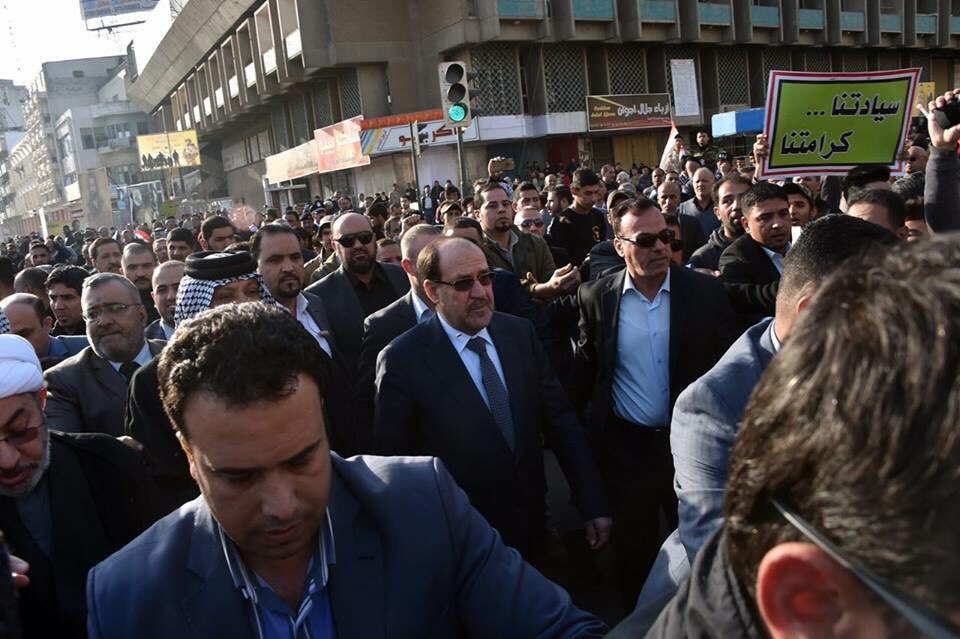
RT reports, "Thousands of Iraqis across the country protested against the deployment of Turkey’s troops to a base near the northern city of Mosul, held by Islamic State militants. Protesters chanted anti-Turkish slogans and burned and trampled on Turkish flags."  Al Arabiya clarifies on the protesters, "Meanwhile, several thousand protesters, most of them members of Shiite paramilitary forces, gathered in central Baghdad on Saturday to demand the withdrawal of Turkish forces from Iraq."


: Turkish signs being burned in .                                                                                                                                                                                                                                                                                   
Embedded image permalink


Ex VP Maliki turned up in anti protests in Baghdad but takes a backseat                                                                                                                                                                                                                                                                                                                                                             
Embedded image permalink


Susannah George and Qassim Abdul-Zahra (AP) report:

Militiamen in fatigues, and their supporters and onlookers gathered in Baghdad’s Tahrir Square, chanting, “No to occupation! No to Turkey!” Some young men burned Turkish flags. Former prime minister Nouri al-Maliki, who is Abadi’s fiercest rival, walked through the square and was mobbed by supporters who took photos and videos with their phones.


The predominately Shi'ite protests follow the pronouncement this week by a Shi'ite cleric.  Ahmed Rasheed, Isabel Coles and Hugh Lawson (REUTERS) report that Iraq's Grand Ayatollah Ali al-Sisanti added his voice Friday to the calls for Turkish troops to leave Iraq via a statement made by spokesperson Sheikh Abdul Mehdi Karbala'i at today's weekly sermon in which the spokesperson declared, "The Iraqi government is responsible for protecting Iraq's sovereignty and must not tolerate and side [with] that [which] infringes upon it, whatever the justification and necessities."


Paul Davis (RUDAW) offers an analysis of the conflict which opens:

The Iraqi government has finally decided to become very agitated over something other than Kurdish oil being sold on the open market, Turkish troops in the north training Peshmerga. While content to have a reported 30,000 Iranian forces in Iraq alongside tens of thousands of Shia militia, whom the Iranians control, the Abadi government is hell bent on removing 150 Turkish trainers. While unable to remove ISIS from Iraq the Iraqi government has gone so far as to threaten to us force against Turkey.


What is the real reason Turkey has troops in Iraq and why is Baghdad so upset? In a word, Kurds. It is always Kurds for the Turks and will always be for Baghdad.


It is becoming abundantly clear that there will be a free and independent Kurdish state on the border with Turkey. It most likely will be, at least in part, the area now controlled by the autonomous Kurdistan Regional Government, and it will come sooner rather than later. Depending on how events transpire it could include Rojava. The removal of ISIS from Mosul will be required and that is beyond the capabilities of Baghdad or, on its own, Erbil. Turkey has the capacity but will need a reason. It is likely that non-regional forces will be needed. Should Mosul be liberated by forces other than those under Baghdad’s control it will be lost to Iraq.   


At RT, Catherine Shakdam offers an analysis which includes:

Whether for a lack of political perspective or a misplaced sense of political grandeur, Erdogan’s Turkey is looking very much the imperial power - a stark break from its former commitment of non-interference.
And if Turkey owes its survival and one could argue return to power, to its prudent foreign policies - favoring cooperation and collaboration, over smug patronage, Erdogan’s recent posing against both Russia and Iran positioned Ankara as yet another foe to contend with.
In a matter of weeks Erdogan managed to shatter decades of careful regional political balancing, failing in one swift move the possibility of a grand alliance against terror -  but then again, it could well be that for all his claims and promises Erdogan wishes not to defeat ISIL, but endeavor to play the beast to feed his neo-Ottoman dreams. Turkey today is indulging radicals their thirst for conquest because it believes it can exploit radicals’ ambitions to serve its own agenda.
And though such allegations might have appeared far-fetched only a few months ago, recent developments opened up truths we cannot afford to deny. 


Lastly, today, the US Defense Dept announced:


Strikes in Iraq
Rocket artillery, bomber, fighter and remotely piloted aircraft conducted 12 strikes in Iraq, coordinated with and in support of Iraq’s government:
-- Near Al Baghdadi, one strike struck an ISIL tactical unit and wounded an ISIL fighter.
-- Near Makhmur, one strike struck an ISIL tactical unit and destroyed an ISIL fighting position.
-- Near Mosul, four strikes struck three separate ISIL tactical units and destroyed an ISIL light machine gun, three ISIL fighting positions, an ISIL heavy machine gun, an ISIL mortar tube, and suppressed an ISIL mortar position.
-- Near Ramadi, three strikes struck two separate ISIL tactical units and destroyed an ISIL anti-air artillery piece, an ISIL vehicle borne improvised explosive device (VBIED), an ISIL fighting position, an ISIL vehicle, an ISIL weapons cache, and two ISIL assembly areas.
-- Near Sinjar, three strikes struck two separate ISIL tactical units and destroyed an ISIL vehicle, an ISIL light machine gun, an ISIL fighting position, and an ISIL supply cache.

Task force officials define a strike as one or more kinetic events that occur in roughly the same geographic location to produce a single, sometimes cumulative, effect. Therefore, officials explained, a single aircraft delivering a single weapon against a lone ISIL vehicle is one strike, but so is multiple aircraft delivering dozens of weapons against buildings, vehicles and weapon systems in a compound, for example, having the cumulative effect of making those targets harder or impossible for ISIL to use. Accordingly, officials said, they do not report the number or type of aircraft employed in a strike, the number of munitions dropped in each strike, or the number of individual munition impact points against a target.


  •  


    Friday, December 11, 2015

    What is the plan?


    At Wednesday's US Senate Armed Services Committee hearing, one thing was clear: Barack has no plan.


    He's going to keep bombing Iraq.


    He's going to keep sending US troops into combat in Iraq.


    And he's got no real plan, no overall strategy.


    Early in the hearing, Committee Chair John McCain noted that fact.


    Then Senator Jeff Sessions noted it, pointing out that it was "not clear" what Barack's plan was.


    He said former Secretary of Defense Robert Gates was "right, we need an over-arching strategy."


    Senator Joe Manchin pointed out that his constituents are asking him what "the end game" is.


    Senator Roger Wicker tried to get straight answers.


    He failed.


    Secretary of Defense Ash Carter couldn't even answer Wicker's question about whether or not Barack's plan required Syrian President Bashar al-Assad being "removed from power."


    And they're wanting more millions to spend on 'the plan' but they can't explain to the Committee, let alone the country, what that money will be used for.


    Carter tried to dismiss the fact that the request was only submitted a week ago and promised to brief them in their offices.


    But he didn't want to go on record explaining what the money was for.


    That's because there is no plan.


    Here's C.I.'s "Iraq snapshot:"


    Thursday, December 10, 2015.  Chaos and violence continue, the State Dept's John Kirby attempts to humiliate and attack a woman in a briefing today, Secretary of Defense Ash Carter inadvertently explains how fear of the 'alternative' leads the US government to support despots, and much more.


    Let's start with bitchy.

    US State Dept spokesperson John Kirby flaunted his own stupidty when he unleashed his bitchy at today's State Dept press briefing and launched his attack on RT [RUSSIA TODAY].


    State Dept. dodges RT’s question about Turkish troops in Iraq, gets personal                                                                                                                                                                                                                                                      
    Embedded image permalink


    Gayane Chichakyan is the RT journalist who dared to ask a question.

    It was a basic question and John Kirby turned into a full on bitch.

    As shameful as he was, equally shameful was REUTERS whose 'reporter' rushed in to change the subject and rescue the State Dept.

    Let's jump in to where Chickakryan attempts to get answers to her questions.


    QUESTION: I have one more question on Turkey, please.

    MR KIRBY: Okay, go ahead.

    QUESTION: Thank you. Well, you were saying that it’s up to Turkey and Iraq to figure out the situation with the uninvited Turkish troops. But the U.S. does take upon itself to invite forces from other countries into Iraq and in Syria. Ash Carter was telling Congress yesterday that he personally reached out to 40 countries asking them to commit special ops for the fight and other support. The Iraqi parliament is concerned that their country is becoming this ground where different countries do what they want. The Iraqi parliament’s Security and Defense Committee is calling for the review or cancelation of the U.S. security agreement with Iraq. What does the U.S. do to address their concerns?


    MR KIRBY: Address whose concerns?


    QUESTION: The Iraqi parliament’s Security and Defense Committee that is now calling to review or cancel the agreement with the U.S.


    MR KIRBY: I haven’t seen those reports, ma’am. We continue to work with the Iraqi Government. The troops that Secretary Carter referred to, that decision was done in full coordination and cooperation with the Iraqi Government. If you’re trying to suggest that somehow U.S. military assistance against ISIL is untoward or being done without full coordination with the Iraq Government, it’s just a completely baseless charge. And I don’t think it’s worth having any more discussions about it.


    QUESTION: But you’re saying – are you saying that you’re not aware of the Iraqi parliament’s – this Security and Defense Committee’s initiative that they want to --


    MR KIRBY: I haven’t seen that, no. I haven’t seen that.


    QUESTION: Okay. What – the situation where the U.S. invites forces --


    MR KIRBY: I’m going to give you just one more, honestly, and then that’s it. Okay?


    QUESTION: Sure.


    MR KIRBY: Go ahead.


    QUESTION: The situation where the U.S. invites forces to Iraq and the U.S. is leading this coalition, but when something goes wrong, the U.S. says it’s none of our business, like with the Turkish troops. Let – you have to figure it out between yourselves. Should it be of no concern to Iraq?


    MR KIRBY: Should what be of no concern? I love these questions that are 10 minutes long then I’m supposed to get the grain of it out of there. Should what be of no concern?


    QUESTION: The fact that when something – you have this cooperation, you have this agreement, but when something goes wrong, the U.S. says it’s none of our business, like with what’s happening with the Turkish troops.


    MR KIRBY: Oh, come on. Again, another ridiculous question. When have we ever said it’s none of our business?


    QUESTION: You are saying that about the Turkish troops.


    MR KIRBY: What I’m – no. No, I’m not. I’m saying that – I’ll say it again, okay? We want this to be worked out bilaterally between Turkey and Iraq. And the way you’re trying to twist all of this around to make it look like we’re doing something nefarious or that we’re – we’ve got some sort of inappropriate relationships here, I mean, it’s just so silly. And I can’t believe --


    QUESTION: Well, am I really twisting it? You – have you --


    MR KIRBY: I can’t believe, honestly, that you aren’t embarrassed to ask these questions. You have to be looking at these questions and almost laughing to yourself, don’t you? I mean, they’re absolutely crazy.


    QUESTION: So --


    MR KIRBY: So we are working very closely with the Abadi government, right. We are working inside a coalition of 65 nations – 65 nations that have signed up to go after ISIL in Iraq and in Syria – let me finish. You’ve had your moment. Sixty-five nations. And what we have said from the very beginning – I said it when I was at the Pentagon in uniform – is that we want any action against ISIL inside Iraq, specifically, to be done with full cooperation and coordination with the Iraqi Government and with their sovereign permission. That hasn’t changed one whit. Now there’s this dispute between Turkey and Iraq over the presence of a small number of troops, okay?


    QUESTION: Should --


    MR KIRBY: And we – I’ve said – I said it over the last several days and I’ll say it again: Nothing’s changed about our position about the sovereign nature of Iraq and the fact that troops operating against ISIL inside Iraq needs to be done with the Iraqi Government’s permission. And we’ve stated that publicly, we’ve stated that privately, to every member of the coalition. Nothing’s changed about that.


    QUESTION: Sir --


    MR KIRBY: And we want Turkey and Iraq to work this out, and they are. You are trying to find a way to make this some big divisive issue, and even the Turks and the Iraqis know that it’s not and they’re working their way through it. So let’s let them work their way through it and let the rest of everybody keep focusing on ISIL, which is what we should do, and which, by the way, the Russians aren’t doing.


    QUESTION: If I may – if I may – if I may --


    QUESTION: Is it – I’m sorry, should I not – should I not ask --


    QUESTION: If I may – if I may --


    QUESTION: Should I not be asking what the U.S. assessment of Turkey’s actions is?


    MR KIRBY: You – ma’am – I’m going take this one, Arshad, then I’m going to come to you. You can – you can --


    QUESTION: Should I not be asking that question? Exactly which question should I be embarrassed about, sir?


    MR KIRBY: You can ask me whatever you want. I’m just stunned that you’re not embarrassed by some of the questions you ask. And I notice that --


    QUESTION: Exactly which question?


    MR KIRBY: I notice that RT very rarely asks any tough questions of their own government. So you can ask whatever you want. That’s the beauty of this setting, right, here at the State Department. You can come in here and ask me whatever you want, and you can be as – just as challenging as you want to be and accusatory in your questions – some of those today, absolutely ridiculous. You can do that here in the United States, but I don’t see you --


    QUESTION: Which question was ridiculous, sir?


    MR KIRBY: I don’t see you asking those same questions of your own government about ISIL in Syria.


    QUESTION: Which of my questions was ridiculous?


    MR KIRBY: And I would love to see those questions get asked.

    Arshad.


    QUESTION: I’d like to switch to just saying one quick word about Barry Schweid.


    First, way to go Arshad Mohammed.  You're a little suck ass, aren't you?

    Arshad is periodically selected as the go-to when the State Dept wants to leak and Arshad, like a declawed house tabby, earns those leaks (billed as "exclusives" and "scoops") by refusing to ever press the State Dept or practice actual journalism.


    Now let's go to John Kirby's stupidity.  One more time:


    QUESTION: Thank you. Well, you were saying that it’s up to Turkey and Iraq to figure out the situation with the uninvited Turkish troops. But the U.S. does take upon itself to invite forces from other countries into Iraq and in Syria. Ash Carter was telling Congress yesterday that he personally reached out to 40 countries asking them to commit special ops for the fight and other support. The Iraqi parliament is concerned that their country is becoming this ground where different countries do what they want. The Iraqi parliament’s Security and Defense Committee is calling for the review or cancelation of the U.S. security agreement with Iraq. What does the U.S. do to address their concerns?

    MR KIRBY: Address whose concerns?


    QUESTION: The Iraqi parliament’s Security and Defense Committee that is now calling to review or cancel the agreement with the U.S.


    MR KIRBY: I haven’t seen those reports, ma’am. We continue to work with the Iraqi Government. The troops that Secretary Carter referred to, that decision was done in full coordination and cooperation with the Iraqi Government. If you’re trying to suggest that somehow U.S. military assistance against ISIL is untoward or being done without full coordination with the Iraq Government, it’s just a completely baseless charge. And I don’t think it’s worth having any more discussions about it.


    QUESTION: But you’re saying – are you saying that you’re not aware of the Iraqi parliament’s – this Security and Defense Committee’s initiative that they want to --


    MR KIRBY: I haven’t seen that, no. I haven’t seen that.


    Is he unable to do his damn job?

    He hasn't seen the reports?

    As of Thursday afternoon, he knew nothing of this?


    Wednesday morning at 7:56 a.m., we posted "Turkey's invasion of Iraq continues" which included:

    SPUTNIK reports:

    The Security and Defense Committee of the Iraqi Parliament has called for a review or cancellation of an agreement with the United States on security over Washington’s lack of a clear reaction to the worsening situation in the country, committee member Hamid al-Mutlaq told Sputnik on Wednesday.


    Wednesday morning, we were aware of this.

    Thursday afternoon, the US State Dept is still ignorant of it?

    John Kirby looks like a stupid fool.

    His ignorance does not speak well for himself or for his department.

    How can they counter terrorism or practice diplomacy if they can't even follow the news cycle?  If 32 hours after a major bit of news makes it into the cycle, they still don't know what's going on, what does that say about their knowledge base or their efforts to carry out their core job functions?


    John Kirby should curb his inner bitch and instead apply himself towards following the news cycle.

    Not only was it in the news Wednesday morning, it is major news that the State Dept should have been following:  A member of the Iraqi Parliament's Security and Defense Committee is stating that the Committee is going to review the security agreement with the US and the State Dept is unaware of that?

    This is further proof that the State Dept is unable to carry out their diplomatic mission in Iraq because they've mistaken themselves for an annex of the Defense Dept (Kirby, after all, is the former Pentagon spokesperson -- so much for rewarding diplomacy or career diplomats at State).

    Whose war on women?

    John Kirby decided to go full on bitch and, it's worth noting, he's never done that to a man.

    But, on the State Dept payroll, he thought he had the right to attack and attempt to humiliate a journalist for asking a question.

    That sort of sexism certainly applied at the Defense Dept which -- all these years later -- still can't honestly address violence against women, let alone harassment.

    What a wonderful way to be an ambassador to the world: Kirby's attack on Gayane Chichakyan and attempt to humiliate her -- and to use humiliation to try to silence her -- on the world stage with the whole world watching.

    That's not diplomacy.

    It's also unacceptable.

    There is also the issue of the revived tensions between the US government and the Russian government.  In that environment, the world doesn't need a bitchy US spokesperson attacking a Russian reporter.

    Before we close this topic out, let's zoom in on this part of the exchange:


    QUESTION: The situation where the U.S. invites forces to Iraq and the U.S. is leading this coalition, but when something goes wrong, the U.S. says it’s none of our business, like with the Turkish troops. Let – you have to figure it out between yourselves. Should it be of no concern to Iraq?

    MR KIRBY: Should what be of no concern? I love these questions that are 10 minutes long then I’m supposed to get the grain of it out of there. Should what be of no concern?


    QUESTION: The fact that when something – you have this cooperation, you have this agreement, but when something goes wrong, the U.S. says it’s none of our business, like with what’s happening with the Turkish troops.


    MR KIRBY: Oh, come on. Again, another ridiculous question. When have we ever said it’s none of our business?


    She's not wrong at all.

    The US has done that repeatedly.

    The State Dept has been one of the worst offenders.

    Oh, we don't want to get into the oil disputes in Iraq -- but the central government out of Baghdad is right!!!!!!

    Do you now how many times Victoria Nuland pulled that crap when she was spokesperson for the State Dept?

    (To Nuland's credit, she never tried to shame a reporter -- or serve her up for public ridicule -- just for asking a question.)


    Or how about the Hawaija massacre?

    On one hand, you had peaceful demonstrators staging a sit-in.

    On the other hand, you had the forces Nouri al-Maliki sent in to surround the square and attack the protesters.


    For those who've forgotten (or maybe never knew to begin with), The April 23, 2013 massacre of a sit-in in Hawija which resulted from  Nouri's federal forces storming in.  Alsumaria noted Kirkuk's Department of Health (Hawija is in Kirkuk)  announced 50 activists have died and 110 were injured in the assault.   AFP reported the death toll eventually (as some wounded died) rose to 53 dead.   UNICEF noted that the dead included 8 children (twelve more were injured).

    The State Dept's response?

    To call for both sides to be civil.

    Both the unarmed protesters practicing civil disobedience and the thugs who murdered them.

    And, go to the archives, the Sunday before the slaughter, I wrote about the State Dept contacting me with their concerns.  They knew where this was headed: Violence.

    And they did nothing.

    Remember that, because we're coming back to that topic as we go into a Congressional hearing below.


    Yesterday's snapshot covered some of Wednesday's Senate Armed Services Committee hearing and the testimony offered by the Vice Chair of the Joint Chiefs Gen Paul Selva and by the Secretary of Defense Ash Carter.  We also covered the money issue in "Turkey's invasion and occupation of Iraq continues..." and Mike's "So now attack helicopters" covered the hearing as well.

    As noted yesterday, the White House is now offering Iraq attack helicopters and the US forces to pilot them.

    Secretary Ash Carter:  Turning to northern Iraq , Pe shmerga units, with the help of U.S. air power and advisers, have retaken the town of Sinjar, cutting the main line of communication between Raqqa and Mosul, the two largest cities under ISIL’s control. To move people and supplies, ISIL now must rely on b ackroads, where we will locate and destroy them. Elsewhere in Iraq, we have about 3,500 troops at six locations in support of Iraqi Security Forces, or ISF. There, we’ve been providing increased lethal fire and augmenting the existing training, advising, and assisting program. And we’re prepared to do more as Iraq shows capability and motivation in the counter-ISIL fight and in reso lving its political divisions. After a frustratingly long time, we are starting to see some movement in the operation to re capture Ramadi. Over the past several months, the coalition has provided specialized training and equipment – including combat engineering techniques like in-stride breaching and bulldozing, and munitions like AT-4 shoulder- fired missiles to stop truck bo mbs – to the Iraqi Army and counter- terrorism service units that are now beginning to enter Ramadi neighborhoods from multiple directions. In fact, in the last 24 hours, the ISF retook the Anbar Operations Center on the northern bank of the Euphrates River across from Ramadi’s city center. This is an important step, but there is still tough fighting ahead. ISIL has counter- attacked several times , but thus far the ISF has shown resilience. The United States is prepared to assist the Iraqi Army with additional unique capabilities to help them finish the job, including attack helicopters and accompanying advisors, if requested by Prime Minister Abadi.


    US President Barack Obama never ended the Iraq War and, after a low intensity breather, is now publicly expanding it yet again.


    Let's note an exchange from Wednesday's hearing.


    Senator Bill Nelson:  So go over to Iraq.  Is that anti-sectarianism?  Is it working with the forces on the ground that we're supporting from the air?


    Secretary Ash Carter:  Well first of all, uh,  Prime Minister Abadi, I've spoken to him frequently.  I'll have the opportunity to speak to him in the coming days uuhhhh when I-I too will be visiting our-our troops in theater.  Is-is  committed  precisely to that kind of vision for Iraq.  I believe him.  I've talked to him.

    Senator Bill Nelson:  Do you think that's working?


    Secretary Ash Carter: Whether he can pull it off in Baghdad, that is obviously a difficult matter for him.  We are supporting him in that regard because we, uh, believe that the alternative -- which is further sectarian division, civil war, cleansing and so forth.  We've seen that before.  And if he can keep his vision of an Iraq which as he called it  is decentralized.  So it's not everybody under the thumb of Baghdad because he knows the Sunni and the Kurds won't go fot that.  But still the ability to retain an integral state that keeps peace within its borders -- that's what he's committed to --

    Senator Bill Nelson:  Right.

    Secretary Ash Carter (Con't):  -- that's the end state we also want in Iraq.

    Senator Bill Nelson:  Right.  So it's possible with Assad leaving Syria, you could get Syria under control but everything could go haywire in Iraq?

    Secretary Ash Carter:  There are two separate dynamics.  They're different dynamics.  There's one thing I'll-I'll mention that I mentioned to you when I was with you six-six weeks ago and has subsequently come to pass.  I was talking about the importance of getting the town of Sinjar.  You're talking about The territory but-but a lot of that territory is empty it's the towns that matter.  The critical crossing of Sinjar.  Now what is Sinjar?  Sinjar is a place in between Mosul and Raqaa.  And to cut ISIL into it's Syrian branch and stop from cross-feeding is a, uh, the objective, uh, of taking Sinjar.  And so in the end the political end states are different for Syria and, uh, Iraqi absolutely.


    That exchange should alarm for so many reasons.

    But chiefly due to Carter's insisting of Haider al-Abadi:


     We are supporting him in that regard because we, uh, believe that the alternative -- which is further sectarian division, civil war, cleansing and so forth.  


    Yeah, that belief allowed the White House go overrule Iraqi voters and give Nouri al-Maliki a second term as prime minister in 2010.

    And Nouri al-Maliki took Iraq to the brink of destruction in his second term.


    While the US government went along with him because of their fears of "the alternative."  Ruled by fear, the US government joined Nouri in corruption and persecution.


    This week, Emma Sky addressed this period in a column for CNN:


    What went wrong?
    The turnout for the 2010 elections was high. Polls showed belief in the political process and optimism that the country was moving beyond the sectarianism that had bedeviled it.
    Iraqiyya, a coalition led by Ayad Allawi (a secular Shia), campaigned on a platform of "no to sectarianism," and "Iraq for all Iraqis." It attracted support from Iraq's Sunnis, secular Shia, and minorities. And it won the most seats in the elections.
    However, Prime Minister Nuri al-Maliki refused to accept the election results. He called for a recount and used Debaathification to try to disqualify Iraqiyya candidates and to annul their votes. When that failed to give him victory, he further intimidated his rivals and pressured the judiciary, underscoring his determination to remain in power.
    [. . .]
    Secure in his seat, al-Maliki accused Sunni politicians of terrorism, and drove them out of the political process. He also reneged on his promises to tribal leaders who had fought against al Qaeda in Iraq, arrested Sunnis en masse, and subverted the democratic institutions that were supposed to keep a check on his power. Sunni protests were violently crushed. All the while, the White House kept silent.
    It was clear to anyone who followed Iraq closely that politics were breaking down -- not "breaking out" as a White House official claimed -- as al-Maliki became increasingly authoritarian and moved closer to Iran. Furthermore, the capacity and willingness of Iraqi society to contain al Qaeda in Iraq was being eroded through the assassination, detention and flight of Sunni Awakening leaders, as well as the increasing politicization of the Iraqi security forces as al-Maliki replaced leaders who he suspected of being close to the United States with ones personally loyal to him.


    Earlier this year, Emma Sky's book  THE UNRAVELING: HIGH HOPES AND MISSED OPPORTUNITIES IN IRAQ   was published.


    Ash Carter's insisting that Haider must be supported because of the fear of the 'alternative' is also important in terms of  a Congressional hearing last week.

    We covered last week's hearing in the Tuesday December 1sts snapshot  and the Wednesday, December 3rd snapshot and in "Ash Carter spun wildly to Congress," additional reporting: Cedric's "Hank Johnson's sexual obsession with Barack" and Wally's "THIS JUST IN! HANK HIS JOHNSON!" covered US House Rep Hank Johnson wasting everyone's time to profess his strangely sexual obsession with Barack and Carter and Gen Joe Dunford refusing to indulge Johnson,  At Rebecca's site, Wally reported on Ranking Member Adam Smith  in "Even House Democrats are criticizing Saint Barack.(Wally)," at Trina's site Ava reported on the obsession with oil that was at the heart of the hearing in "It's still about the oil," Mike reported on US House Rep Niki Tsongas offering some realities about the so-called coalition in "US Armed Services Committee hearing offers a little bit of reality," Ruth reported on US House Rep John Kline's questioning which established that there was no cap on the number of US troops that could be in Iraq "Iraq still matters,"  Kat took on the surreal aspect with "The US just declared war on everyone but Santa," Elaine covered one time anti-war US House Rep Jackie Speier making an idiot of herself in statements and dress with "The idiot Jackie Speier" and Dona moderated a roundtable at Third on the hearing with "Congress and Iraq."


    From that hearing, we'll note this exchange.


    US House Rep Beto O'Rourke:   There's so much in those countries -- I'll just use Iraq as an example -- that we do not control, cannot control and will not be able to predict when it comes to the political outcomes and so when we say we are going to set conditions on our aid, when we say we are going to set conditions on our military presence, do we really mean that?  Is that a viable threat?  Will we really walk away from Iraq if the government there doesn't meet those conditions?  And I think that's an important question because if, in fact, we will not, then I wonder what the motivation is there for the Iraqi government to take the very important and very difficult steps to integrate these other minorities -- whether they be Kurds, whether they be Sunnis -- into a functioning government -- decentralized or otherwise?


    Secretary Ash Carter: Uh, first of all with respect to the first part of your question, uhm, the -- It -- The -- Your point gets back -- is exactly the military and the political going together.  In addition to the -- The only end state that involves the lasting defeat of ISIL is one in which there are -- whether there is local governance that cannot be once again supplanted by ISIL.  That's why once again the political and the military go together -- that's the heart of the strategy and that's why enabling committed, capable forces who can make victory stick is the other part of the definition of victory, critical --


    US House Rep Beto O'Rourke:  Yes.


    Secretary Ash Carter (Con't):  -- to the strategy. With respect to the leverage, I'll start there in Baghdad but the leverage involves offering to do more for those who are pursuing the same objectives and withholding our support from those who are taking a different path or not going down the path they're supposed to.  So we find alternatives, we find people that can act.  If-if-if the people 
    that we're dealing with are not capable of -- because we have to act and we will find such forces that are capable. 


    Nouri al-Maliki was rewarded by the White House with a second term when he'd done nothing to bring Iraq together.  And after Barack Obama gave Nouri a second term in 2010, Nouri went on to further persecute the Sunnis.


    When the Hawija massacre took place in April 2013?

    The US State Dept and President Barack Obama were both too interested, too vested in supporting despot Nouri.

    Nouri was allowed to use Iraqi forces to kill innocent civilians -- over 50 of them -- including children! -- and that was because Barack feared the 'alternative' to Nouri.


    While so much of the press ignored the massacre, others stepped up.   BRussells Tribunal carried a translation of one activist who was an eye-witness to what went down:


    I am Thamer Hussein Mousa from the village of Mansuriya in the district of Hawija. I am disabled. My left arm was amputated from the shoulder and my left leg amputated from the hip, my right leg is paralyzed due to a sciatic nerve injury, and I have lost sight in my left eye.
    I have five daughters and one son. My son’s name is Mohammed Thamer. I am no different to any other Iraqi citizen. I love what is good for my people and would like to see an end to the injustice in my country.

    When we heard about the peaceful protests in Al-Hawija, taking place at ‘dignity and honor square’, I began attending with my son to reclaim our usurped rights. We attended the protests every day, but last Friday the area of protest was besieged before my son and I could leave; just like all the other protestors there.

    Food and drink were forbidden to be brought into the area….

    On the day of the massacre (Tuesday 23 April 2013) we were caught by surprise when Al-Maliki forces started to raid the area. They began by spraying boiling water on the protestors, followed by heavy helicopter shelling. My little son stood beside me. We were both injured due to the shelling.

    My son, who stood next to my wheelchair, refused to leave me alone. He told me that he was afraid and that we needed to get out of the area. We tried to leave. My son pushed my wheelchair and all around us, people were falling to the ground.

    Shortly after that, two men dressed in military uniforms approached us. One of them spoke to us in Persian; therefore we didn’t understand what he said. His partner then translated. It was nothing but insults and curses. He then asked me “Handicapped, what do you want?” I did not reply. Finally I said to him, “Kill me, but please spare my son”. My son interrupted me and said, “No, kill me but spare my father”. Again I told him “Please, spare my son. His mother is waiting for him and I am just a tired, disabled man. Kill me, but please leave my son”. The man replied “No, I will kill your son first and then you. This will serve you as a lesson.” He then took my son and killed him right in front of my eyes. He fired bullets into his chest and then fired more rounds. I can’t recall anything after that. I lost consciousness and only woke up in the hospital, where I underwent surgery as my intestines were hanging out of my body as a result of the shot.

    After all of what has happened to me and my little son – my only son, the son who I was waiting for to grow up so he could help me – after all that, I was surprised to hear Ali Ghaidan (Lieutenant General, Commander of all Iraqi Army Ground Forces) saying on television, “We killed terrorists” and displaying a list of names, among them my name: Thamer Hussein Mousa.

    I ask you by the name of God, I appeal to everyone who has a shred of humanity. Is it reasonable to label me a terrorist while I am in this situation, with this arm, and with this paralyzed leg and a blind eye?

    I ask you by the name of God, is it reasonable to label me a terrorist? I appeal to all civil society and human rights organizations, the League of Arab States and the Conference of Islamic States to consider my situation; all alone with my five baby daughters, with no one to support us but God. I was waiting for my son to grow up and he was killed in this horrifying way.


    I hold Obama responsible for this act because he is the one who gave them these weapons. The weapons and aircrafts they used and fired upon us were American weapons. I also hold the United States of America responsible for this criminal act, above all, Obama.


    That's reality.

    And that's what Barack tolerated and embraced out of fear of the 'alternative.'

    US House Rep Beto O'Rourke was right to ask if there is anything that will make the US government withdraw its support?

    Ash Carter stammered through a lot of words but he never could provide a real answer to the question.


    In the same hearing, US House Rep Adam Smith (Ranking Member of the House Armed Services Committee) noted how there's little difference for Iraqis with Haider al-Abadi replacing Nouri as prime minister (in the fall of 2014).


    But Ash Carter wants to pretend otherwise.

    Let's move to another exchange from this week's Senate Armed Services Committee hearing.


    Senator Mazie Hirono:  What does defeating ISIS look like?


    Secretary Ash Carter:  In Iraq and Syria, which I said is-i-is necessary but not sufficient, but necessary?  It means destroying their organization, their leadership, their ability to control territory, their ability to have a source of revenue and their ability to claim that they are anything but a bunch of barbaraians.  That's what eliminating them means -- that's the end state that we're seeking in Iraq and Syria.  Of course, to get that to stick brings us back to what others -- to what others have been talking about: the political dimension of it.  But for the military dimension of it, that's the point of view, that's the objective.


    No one's talking about the political dimensions.


    If a senator or House representative happens to ask about it, the administration avoids the issue.


    From last week's House Armed Services Committee hearing:


    US House Rep Loretta Sanchez:  You said that we are arming the Kurds.  The last time I spoke to [KRG President Mahmoud] Barzani, he suggested that they needed heavier duty weapons versus light arms.  And so my question -- my first question -- would be what are we arming them with?  I mean, is this really for the battlefield that they find?  Secondly,  I'd like you to address this whole issue with respect to the Iraqi army and the inability for us to get integrated -- or for Iraq's government to get it integrated.  I remember back in the -- under the Constitution and the whole issue of, for example, having a vote on the Kurd area being an independent entity, for example.  That was something that I continued to ask our military leaders at the time who were overseeing Iraq and the reality was they kept saying, 'That's the hardest part, that's the hardest part, we're going to get to it.'  And we never got to it before we were gone.  Now we see the fruits of that in that we are still not able to have a military that -- or police force -- that's very integrated.  So what do we do about that?   Uhm, so we've been taking back territory in Iraq and one of the issues that we had is it always takes additional -- I mean, we need to leave troops there or we need to leave somebody there in order to hold onto it. Otherwise, we end up losing that territory.  So what is our strategy to do that?  And the recruitment effort.  I would like -- and I'm sure that it would be not within the public realm, but I would love to get briefed on the cyber issues and how we're countering the recruitment with respect to ISIS, ISIL, whatever you want to call them. these days, from a global perspective.  But in particular are we doing anything that you can talk about in this setting with respect to the recruiting effort in the region itself?  And lastly, DIME -- Diplomacy, Intelligence, Military, Economic.  You know, it's not just military that we need here.  So, Secretary, if you could speak a little to what are some of the other efforts we're doing to counter-act what is really something we need to eliminate which is ISIS.  Thank you.

    Secretary Ash Carter: Uh-uh, Congresswoman Sanchez, I'll touch two of the points and ask-ask the Chairman especially with respect -- with-with respect to arming the Kurds -- if you don't mind, Mr. Chairman -- and-and-and generally the Iraqi security forces.  Uhm, you talk about DIME?  Absolutely, it is essential that we recognize even though we -- uhh-uhh, I believe this is absolutely true -- are the center of the campaign because there must be a military defeat of ISIL.  And I also believe that, uh, Iraq and Syria since it is the heart of ISIL, we have to defeat it there.  That said, this is a global fight, it's a multi-dimensional fight, it's in the intelligence sphere, it's in the homeland security sphere, it's in the law enforcement sphere.  And I'm not going to [have] much more to say about that except that I have begun to convene, uh, with Secretary Kerry -- and I appreciate his cooperation, in this regard -- all of the agencies and going through what we're all doing -- making sure that the right hand knows what the left is. So in cyber, you're right I can't talk about it here.  I'm happy to come give you a classified briefing.  But we are linked up.  That's very important.  The FBI.  Jim Comey. Homeland Security.  The intelligence community.  Uh-uh and-and our DoD people.  Last thing I'll say is you ask, we thought about a hold force, a-uh-ugh necessity for a hold force is at the root of our strategy. Our strategy is to find, identify and enable forces that can not only take territory but hold territory because we are -- we know from the last fourteen years that that's the tricky part.  The hard part about getting victory to stick is to find people who can hold territory and govern it decently so that the likes of ISIL don't come back.  And-and as I said, they're hard to find.  They do exist but they're hard to find.  And we're going to try to make a snowball and get more. 


    DIME's important, Carter insists.

    But no time and effort is being expanded on it.

    All the talk is of bombing, all the focus is on military.

    Over the next 12 months, let's pretend the US war planes could bomb every member of the Islamic State to death.

    Then what?

    Because the Islamic State would continue to multiply -- and will continue to multiply.

    Until you address the reasons it got a foothold in Iraq to begin with (primarily the persecution of the Sunni people), you aren't defeating the Islamic State and you're not preventing it from multiplying.


    Meanwhile, Robert Burns (AP) reports on Barack's plans to send a new group of US forces into Iraq and notes:

    Even the name — "specialized expeditionary targeting force" — is a bit of a riddle.
    The main point is that the force is intended to ratchet up pressure on Islamic State militants by using a small group of special operations troops — possibly fewer than 100 — to more aggressively use intelligence information, including capturing and killing the group's leaders. In theory, this would generate even more and better intelligence, feeding what the military calls a "virtuous cycle" of intelligence-driven air and ground operations.


    We'll close with this from the US Defense Dept:


    Strikes in Iraq
    Attack, bomber, fighter and remotely piloted aircraft conducted 20 strikes in Iraq, coordinated with and in support of Iraq’s government:

    -- Near Huwayjah, two strikes struck an ISIL tactical unit and destroyed two ISIL vehicles and wounded two ISIL fighters.

    -- Near Qaim, two strikes struck two separate ISIL tactical units and destroyed two ISIL vehicles.

    -- Near Fallujah, one strike destroyed seven ISIL fighting positions.

    -- Near Kisik, three strikes struck three separate ISIL tactical units and destroyed two ISIL vehicles and an ISIL fighting position.

    -- Near Mosul, two strikes struck two separate ISIL tactical units and destroyed an ISIL vehicle and an ISIL checkpoint.

    -- Near Qayyarah, one strike struck an ISIL tactical unit.

    -- Near Ramadi, six strikes struck two separate ISIL tactical units and destroyed two ISIL boats, five ISIL fighting positions, three ISIL weapons caches, and four ISIL command and control nodes.

    -- Near Sinjar, two strikes struck an ISIL tactical unit and destroyed two ISIL heavy machine guns, an ISIL fighting position, and two ISIL vehicles.

    -- Near Sultan Abdallah, one strike struck an ISIL tactical unit and destroyed an ISIL fighting position and an ISIL vehicle.

    Task force officials define a strike as one or more kinetic events that occur in roughly the same geographic location to produce a single, sometimes cumulative, effect. Therefore, officials explained, a single aircraft delivering a single weapon against a lone ISIL vehicle is one strike, but so is multiple aircraft delivering dozens of weapons against buildings, vehicles and weapon systems in a compound, for example, having the cumulative effect of making those targets harder or impossible for ISIL to use. Accordingly, officials said, they do not report the number or type of aircraft employed in a strike, the number of munitions dropped in each strike, or the number of individual munition impact points against a target.


    Thursday, December 10, 2015

    So now attack helicopters


    I was at the hearing today and I wish I had C.I.'s energy.


    I'm too wiped out to do much.


    But I just sat there stunned.


    Last week, Ash Carter, Secretary of Defense, was revealing that US troops would be in combat in Iraq.


    Today?


    He's yacking on about how, if Prime Minister Haider al-Abadi gives the go ahead, US soliders will be flying attack helicopters to retake Ramadi.


    Barack's a damn liar.


    Here's C.I.'s "Iraq snapshot:"


    Wednesday, December 9, 2015.  Chaos and violence continue, the US government continues dropping bombs on Iraq, Turkey refuses to leave Iraq, Ash Carter announces the White House is prepared to send US troops in attack helicopters to retake Ramadi, and much more.


    Today, US Secretary of Defense Ash Carter informed the world that the White House was prepared to send US troops into battle in Iraq including with the use of helicopters.


    Carter was appearing before the Senate Armed Services Committee along side the Vice Chair of the Joint Chiefs of Staff Gen Paul Selva.


    Carter last appeared together before the House Armed Services Committee (at that hearing, he was testifying with the Chair of the Joint Chiefs of Staff Gen Joe Dunford).  It was at that hearing that Gen Ash Carter announced the change in policy:


    Next, in full coordination with the government of Iraq, we're deploying a specialized, expeditionary targeting force to assist Iraqi and Kurdish Peshmerga forces and put even more pressure on ISIL.  These special operators will, over time, be able to conduct raids, free hostages, gather intelligence and capture ISIL leaders.   


    We covered last week's hearing in the Tuesday December 1sts snapshot  and the Wednesday, December 3rd snapshot and in "Ash Carter spun wildly to Congress," additional reporting: Cedric's "Hank Johnson's sexual obsession with Barack" and Wally's "THIS JUST IN! HANK HIS JOHNSON!" covered US House Rep Hank Johnson wasting everyone's time to profess his strangely sexual obsession with Barack and Carter and Gen Joe Dunford refusing to indulge Johnson,  At Rebecca's site, Wally reported on Ranking Member Adam Smith  in "Even House Democrats are criticizing Saint Barack.(Wally)," at Trina's site Ava reported on the obsession with oil that was at the heart of the hearing in "It's still about the oil," Mike reported on US House Rep Niki Tsongas offering some realities about the so-called coalition in "US Armed Services Committee hearing offers a little bit of reality," Ruth reported on US House Rep John Kline's questioning which established that there was no cap on the number of US troops that could be in Iraq "Iraq still matters,"  Kat took on the surreal aspect with "The US just declared war on everyone but Santa," Elaine covered one time anti-war US House Rep Jackie Speier making an idiot of herself in statements and dress with "The idiot Jackie Speier" and Dona moderated a roundtable at Third on the hearing with "Congress and Iraq."


    Today, Ash Carter announced US troops could help retake Ramadi with attack helicopters -- provided Iraq's Prime Minister Haider al-Abadi gave the go ahead.

    In his opening remarks, Carter declared, "After a frustrating long time, we are starting to see some movement in the operation to recapture Ramadi."  The main reveal in that sentence would be "frustratingly long time."

    And  "some movement"?  They've been in this battle since May.

    At what point do they actually recapture Ramadi?


    We'll note this from Carter:

    Next, in full coordination with the government of Iraq, we’ re deploying a specialized expeditionary targeting force to assist the ISF and Kurdish Peshmerga forces and to put even more pressure on ISIL through a variety of raids and intelligence gathering . While this force will also be in a position to conduct unilateral operations in Syria, in Iraq the force will operate at the invitation of the Iraqi government and focus on defending its borders and building the ISF's ability to conduct similar operations. We will not be discussing specifics of this expeditionary targeting force or its operations in unclassified settings, both to protect our forces and preserve the element of surprise. We want this expeditionary targeting force to make ISIL and its leaders wonder when they go to bed at night, who's going to be coming in the window? Chairman Dunford and I recognize that in principle there are alternatives to the strategic approach we have adopted to drive ISIL from Syria n and Iraqi territory -- including the introduction of a significant foreign ground force, hypothetically international but including U.S. forces, even in the absence of capable, motivated, local ground forces. While we certainly have the capability to furnish a U.S. component to such a ground force, we have not recommended this course of action for several reasons: In the near -term, it would be a significant undertaking that, realistically, we would have to do largely by ourselves; and it would be ceding our comparative advantage of special forces, mobility, and firepower, instead fighting on the enemy's terms. In the medium- term, by seeming to Americanize the conflicts in Iraq and Syria, we could well turn those fighting ISIL or inclined to resist their rule into fighting us instead . As Chairman Dunford testified last week, ISIL "would love nothing more than a large presence of U.S. forces on the ground in Iraq and Syria, so that they could have a call to jihad." And lastly, in the longterm, there would still remain the problem of securing and governing the territory -- these must be done by local forces. So in the end, while we can enable them, we cannot substitute for them.


    The above statements were touched on during a line of questioning.


    Senator John McCain is the Chair of the Committee and Senator Jack Reed is the Ranking Member. Today, we're going to note McCain's line of questioning.  Next time we'll not Senator Bill Nelson.


    Chair John McCain:  Mr. Secretary, on the first of December before the House Armed Services Committee, Congressman Forbes asked Gen Dunford,  


    US House Rep randy Forbes:  Have we currently contained ISIL.

    Gen Joe Dunford:  We have not -- We have not contained ISIL.


    Chair John McCain:  Uh, Mr. Secretary, do you agree with Gen Dunford?


    Secretary Ash Carter:  I, uh, agree with what Gen Dunford said, yes.


    Chair John McCain:  So if we have not contained -- we have not contained ISIL, how are we to believe that we are succeeding against ISIL?

    Secretary Ash Carter:  I, uh, think that, uhm, we are, uh, building momentum against ISIL.  I'm going to be very careful about describing the trajec -- I've described the trajectory of that success all around Iraq and Syria, some actions we're taking in Libya.  Uh, it's not my principal responsibility but I met yesterday with the Secretary of Homeland Security, the Director of the FBI, the Director of National Intelligence and other officials to talk about what we could do more of to -- uhm, uh-uh, strengthen the defense of the homeland as the Dept of Defense.  But in our principle responsibility which is to take the fight to Syria and Iraq, I've  described the actions that we've taken in just the -- 


    Chair John McCain:  Thank you.

    Secretary Ash Carter (Con't): -- and I think they are building momentum.

    Chair John McCain:  Thank you.   How long do you think it will be before we retake Mosul or Raqqa?

    Secretary Ash Carter:  Uh-uh, with respect to Mosul, Mr. Chairman, uh, it is hard to say because it depends -- that depends much on the progress of the Iraqi security forces which I described in building themselves into a more capable combat force.  With respect to Ramadi -- 

    Chair John McCain:  Raqqa.

    Secretary Ash Carter (Con't):  -- as I described --

    Chair John McCain:  Raqqa

    Secretary Ash Carter:  Oh-oh, Raqqa. Well, Raqqa?  There the, uh, problem -- and you noted this yourself, Mr. Chairman, uh, the, uh, Syrian Kurds to the north have done an excellent job of clearing their territory --

    Chair John McCain:  We're not going to go into -- We're not going to go into Raqqa and you I know that.

    Secretary Ash Carter:  They're not going to go to Raqqa, no, no -- 


    Chair John McCain:  We haven't --

    Secretary Ash Carter:  It would be -- It would be the Syrian -- it would be the Syrian Arabs.

    Chair John McCain:  I guess the point here, Mr. Secretary, here we are with attacks on the homeland  of the United States of America, we have not contained ISIL and we have no timeline.  The timeline I was given when Senator [Lindsey] Graham and I went over there was at least the end of next year for Mosul and there is no plan, no strategy to retake Raqqa and I think it's pretty obvious to all that as long as they have the caliphate base then they are able to orchestrate  attacks such as they've successfully achieved in the last several weeks whether it be Ankara, Russian airliners, southern Beirut, Paris or San Bernardino. So here we are with a -- and you've described some measures that are probably very helpful but with no timeline with which to take out the caliphate from which there are many things happening including -- according to news reports -- developing chemical weapons. So -- and this is why I'm really puzzled.  This morning, by the way, on one of the news shows [MSNBC's MORNING JOE], former head of the United States Army, Chief of Staff of the United States Army, Gen Ray Odierno said we ought to have American contingent troops on the ground.  And I frankly do not understand the logic in your statement about "while you certainly have the capability to harness a US component in such a ground force, we do not recommend it because it would be a significant undertaking" -- I agree -- "we would have to do it largely by ourselves" -- I do not agree -- "it would be ceding our comparative advantage" -- we'd be -- "in the medium term it would seem to Americanize the conflict" -- Does somehow -- does anybody really believe that if the United States struck  back against the people that just slaughtered some Americans in San Bernardino that somehow that would encourage them?  What encourages them, Mr. Secretary, is success.  And they have a pretty serious record here of success just in the last couple of months just since you were here.  So I do not understand why in the world you wouldn't want Gen [Jack] Keane, the architect of the surge, the successful surge, and other military leaders including, this morning, former Chief of Staff of the Untied States Army, a small component of American forces with an international force which could be -- if the United States had the credibility -- could be gathered and then go in and take out this caliphate.  As long as the caliphate -- I know of no expert who doesn't believe that as long as this caliphate exists in Raqqa they're going to be able to orchestrate attacks and metastasize and maybe even move to Libya.  So maybe you can help the Committee out again that this would somehow cede a comparative advantage if we went in with a large Arab force, the Turks and Egyptians even other Sunni nations and go in there and take those people out?  There's 20 to 30,000 of them.  They're -- It's -- They are not giants.  So -- But -- Finally --

    Secretary Ash Carter:  Yeah.

    Chair John McCain:  --  someone's going to have to convince me that air power alone and Special Operation Forces are going to succeed in the short term in order to prevent other further things such as San Bernardino.  I'd love to hear your response.

    Secretary Ash Carter:  Uh, a couple of things, Mr. Chairman.  First of all, to your main point about, uh-uhm, more American forces -- and I-I-I would say Special Forces but others as well that train, advise and accompany -- they're not Special Forces, we are doing --

    Chair John McCain:  -- I was talking about a multi-national force.

    Secretary Ash Carter:  There, Mr. Chairman, I-uh-uh, as I indicated, I too wish that particularly the Sunni Arab nations of the Gulf would do more.  And going way back --

    Chair John McCain:  They are willing to do so --

    Secretary Ash Carter (Con't):  -- to -- I've --

    Chair John McCain (Con't):  -- if there's a large commitment.

    Secretary Ash Cater (Con't):  -- I've had -- I've had lengthy conversations --

    Chair John McCain:  And so have I.

    Secretary Ash Carter (Con't):  -- with representatives there.  Well I-I-I-I have to say that, uhm, I have, uh, consistently emphasized to them that they have a unique role here and, uh, also so far as they're concerned about Iran which is another concern that they have -- by the way, that we have also -- a totally different but, uh, serious subject also.  Uh, that, uh, what I've emphasized to them is that we don't like it but the Iranians are in the game on the ground.  And I very much would like -- we would very much welcome -- we have repeatedly said this -- working with those countries on the ground because we believe as you noted that they, uh, would have a distinct advantage in a ground fight.  With respect to the Europeans, the Europeans have, generally speaking, uh, offered to do more within their capabilities and capacities.  I will note here -- and this is uneven across-across Europe -- but in general  I am quite concerned with the level of investment that Europe is making in its militaries and its alliance and partnership and, therefore, with the United States, there is much more that their economies would enable, uhm, them to do and that their history as-as-as standing up for the same kind of civilized values that we stand up with really require of them.  And so while we're getting more from the Europeans -- and I've indicated I'd like for more -- and I'd like there to still be more so in that sense I'm completely with you.  I-I-I simply on the basis of my urgent and consistent consultations with them unless, uh-uh-uh-uh-uh have less, uh, high hopes, uh, perhaps that you  would assemble such force.  We would certainly welcome that.  With that --

    Chair John McCain:  Could I just also say that I urgently and fervently  ask you for a strategy that you can tell us when we're going to take Mosul, when we're going to take Raqqa and when we're going to wipe out this caliphate.  And, frankly, I have not seen that.  General, did you want to add anything? 

    Gen Paul Selva:  Sir, I would add three points. First, I agree completely that defending the homeland is our top priority.  Second, taking the fight -- 

    Chair John McCain:  That's helpful.

    Gen Paul Selva (Con't):  -- taking the fight to the caliphate is what is going on today in Iraq and in Syria.  The combination of increasing the momentum with the movements in Iraq in Baiji as well as in Ramadi and partnering with --

    Chair John McCain:   And, again, General there is no timeline for Mosul and Raqqa which is the basis of the caliphate. 

    Gen Paul Selva:  Sir, the fight on the ground defines the progress we will make against the caliphate.  We have put significant pressure on northern Syria.  We have -- we have taken -- with Syrian Arab coalition partners -- have taken significant ground in the north and in the east of Syria.  They are using the equipment that we have provided  to put pressure on ISIL's main lines of communication between Raqqa and Mosul.  To provide a timeline would be to deny the fact that the enemy on the ground gets a vote but they do not have freedom of maneuver.  They do not have operational freedom of maneuver, they do not have tactical -- 

    Chair John McCain:  General, they were just able to orchestrate an attack in San Bernardino, California.  My time is long ago expired. 


    Barack Obama's decision to break his promise of no-boots-on-the-ground was raised in today's State Dept press briefing


     QUESTION: Would you agree that President Obama’s initial plan not to put U.S. boots on the ground to fight ISIL has changed?

    MR KIRBY: I’m sorry, I did not hear the first part of your question.

    QUESTION: Would you agree that President Obama’s initial plan not to put U.S. boots on the ground to fight ISIL has changed?

    MR KIRBY: Would I agree that his original decision not to put U.S. boots on the ground to fight ISIL has changed?

    QUESTION: That’s correct.


    MR KIRBY: What’s happened is the – so first of all, let me back up. There’s – the President has been clear from the very beginning as Commander-in-Chief that we’re not going to fight a large, sustained combat counter-insurgency effort in Iraq or in Syria against ISIL. He never said there was never going to be U.S. boots on the ground. And a matter of fact, there’s more than 3,000 U.S. troops in Iraq right now in a training, advising, and assisting capacity. The additional Special Operations Forces that the Secretary of Defense has talked about and which Secretary Kerry fully supports, which will be operating – there’ll be a small expeditionary force that they’ve already – that the Defense Department has already talked about in Iraq, and then there will be some – there are some small number in Syria as we speak – are largely an extension of that same mission: train, advise, and assist.
    Now, that said, the Defense Department – and I don’t want to speak to military matters too much, but the Defense Department has said that there will be a component of their job, these Special Operations Forces, that would include conducting raids and assisting indigenous partners in combat that they are conducting against ISIL. So it’s very much consistent with the original mission set given to U.S. troops that have been assisting indigenous partners against ISIL. But nothing has changed about the Commander-in-Chief’s very clear direction that this isn’t going to be a long, sustained U.S. ground operation or effort against ISIL.


    QUESTION: Do you think that the 3,500 troops and more on their way is not a big ground operation? Do you --


    MR KIRBY: It’s not when you consider the scale of the kind of force presence that we had in Iraq up until 2011 and what we had in Afghanistan – certainly nowhere near what we have in Afghanistan now, which is just under 10,000. So it’s not on that scale, and that’s the scale that we’re measuring it against.
    Again, I really don’t want to talk about military matters, but nobody’s underestimating that 3,000 is still 3,000, and that U.S. troops are in – are doing important work against a very – assisting others against a very dangerous enemy. We’re all mindful of that. And not to mention that you have pilots and air crew that are also flying combat missions over Iraq and Syria. I think everybody understands that – the importance of that. But it’s nowhere near the scale in terms of the troops that we have seen in the last 14 years in both Iraq and Afghanistan. It’s much smaller than that, and I think it – as we used to say, it’s not just how many you have; it’s what they’re doing. And it’s very clear that the mission for our troops against ISIL is the same mission it’s always been, which is to help degrade and destroy this organization by helping build the capacity of indigenous partners on the ground, both Iraq – both in Iraq and in Syria. Okay?


    QUESTION: But it’s also clear that those are boots on the ground, right, right now?


    MR KIRBY: I’m not disputing that there are U.S. troops on the ground. But nobody ever said there – nobody said there wouldn’t ever be. What was made clear was that the mission wouldn’t be a large, sustained ground combat operation against ISIL, and we aren’t doing that. That is – nothing has changed about that, not one bit.


    QUESTION: John, I just wanted to – if you could clarify the use of the term “expeditionary” force. It’s a mouthful. Can --


    MR KIRBY: Expeditionary.

    QUESTION: Expeditionary --

    MR KIRBY: Just say it slow. It just rolls right off.

    QUESTION: Is it – I mean I – “expeditionary.”

    MR KIRBY: There you go.

    QUESTION: Okay. So is it intended to expedite – I mean, is that – what is it going to do?

    MR KIRBY: No, “expeditionary” --

    QUESTION: I mean, as a military man, explain to us the difference --

    MR KIRBY: “Expeditionary” means that the mission or that – and the units applied to a mission are being deployed someplace other than where they’re based for usually a limited amount of time and for a very discrete mission set.

    QUESTION: So it is mobility, right?

    MR KIRBY: It – part of being expeditionary is being agile, it’s being flexible, it’s being mobile. Absolutely, yeah.

    QUESTION: Okay. So they could strike, let’s say, here one day, then move another 400 miles and strike?

    MR KIRBY: Well, I mean, it’s about being mobile, yes. It is. But, I mean, I wouldn’t get into specific operational parameters.
    Yeah.

    QUESTION: And so how come this was never used before? This is the first time this phrase is being used --

    QUESTION: Since the Spanish-American --

    QUESTION: If all it means is that they’re being sent other than where they’re based, then presumably all troops that are sent elsewhere --

    MR KIRBY: Well, you’d have to --

    QUESTION: (Inaudible.) It’s been used for decades.

    QUESTION: Really?

    QUESTION: Yeah.

    QUESTION: It was used by --

    QUESTION: The Allied Expeditionary Force that went to – that fought in World War I. (Laughter.)

    MR KIRBY: I don’t think I – I don’t think I need to be here anymore.

    QUESTION: You’ve got to say – you’ve got to – (laughter) --

    MR KIRBY: I defer to Arshad, who’s absolutely correct. (Laughter.) No, he’s right.

    QUESTION: Someone with more knowledge --

    MR KIRBY: It’s not a new phrase, it’s not a new term, and I would point you to the Defense Department for more details about that.


    And there you see the useless State Dept press -- more focused on when the term "expeditionary" was last used or first used than on the broken promises of a sitting president.


    They also aren't eager to question the State Dept or the Defense Dept -- let alone Barack himself -- on how the plan or 'plan' has been a failure.


    Today, the Defense Dept announced:

    Strikes in Iraq
    Rocket artillery and fighter, bomber, attack, and remotely piloted aircraft conducted 22 strikes in Iraq, coordinated with and in support of the Iraqi government:
    -- Near Huwayjah, a strike destroyed four ISIL bunkers and seven ISIL trenches.
    -- Near Albu Hayat, a strike struck an ISIL tactical unit and destroyed two ISIL vehicles, two ISIL rockets, and an ISIL weapons cache.
    -- Near Kirkuk, a strike struck an ISIL tactical unit, suppressed an ISIL mortar system, and destroyed an ISIL heavy machine gun and two ISIL fighting positions.
    -- Near Kisik, a strike destroyed four ISIL rockets.
    -- Near Mosul, two strikes struck an ISIL tactical unit and destroyed an ISIL vehicle.
    -- Near Qayyarah, seven strikes struck an ISIL logistical facility, an ISIL training facility, an ISIL weapons cache, an ISIL weapons storage facility, two ISIL staging areas, and an ISIL tactical unit, and destroyed an ISIL bunker.
    -- Near Ramadi, four strikes struck three separate large ISIL tactical units, denied ISIL access to terrain, and destroyed three ISIL bed down locations, two ISIL light machine guns, two ISIL heavy machine guns, an ISIL recoilless rifle, four ISIL fighting positions, an ISIL tactical vehicle, three ISIL buildings, four ISIL vehicle bombs, an ISIL vehicle bomb making factory, an ISIL staging area, an ISIL compound, an ISIL resupply location, and two ISIL command and control nodes.
    -- Near Sinjar, three strikes struck two separate ISIL tactical units, immobilized an ISIL vehicle, and destroyed three ISIL fighting positions and an ISIL heavy machine gun.
    -- Near Baghdadi, a strike struck an ISIL tactical unit and destroyed an ISIL building.
    -- Near Fallujah, a strike destroyed an ISIL homemade explosives cache, an ISIL bed down location and an ISIL vehicle bomb making factory.


    Task force officials define a strike as one or more kinetic events that occur in roughly the same geographic location to produce a single, sometimes cumulative, effect. Therefore, officials explained, a single aircraft delivering a single weapon against a lone ISIL vehicle is one strike, but so is multiple aircraft delivering dozens of weapons against buildings, vehicles and weapon systems in a compound, for example, having the cumulative effect of making those targets harder or impossible for ISIL to use. Accordingly, officials said, they do not report the number or type of aircraft employed in a strike, the number of munitions dropped in each strike, or the number of individual munition impact points against a target.
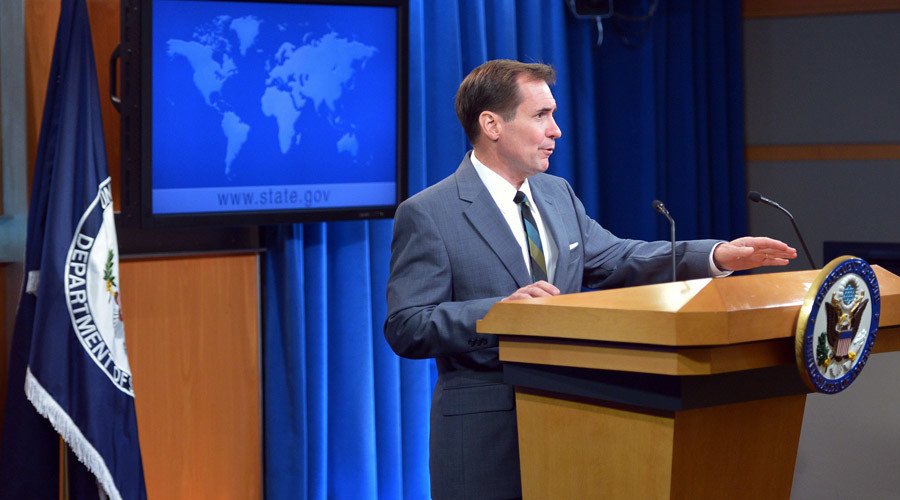


    Chair John McCain:  In response, Mr. Secretary, in response to your last two points?  One, on the funding, we just received that request last week but you know very well that's the result of the absolute failure of the expenditure of what was judged then to be $43 million and for or five people were trained  We don't want to approve of something like that again.  We want to -- We want to -- If you want that kind of money to train and equip, we want to know what the plan is.  And we don't want to see a repetition of testimony by the head of Central Command who said, "Well we have four or five less and we've spent $43 million."  We have an obligation to the taxpayers

    Turning to the continued Turkish invasion of Iraq, Sunday, Iraqi Prime Minister Haider al-Abadi gave Turkey 48 hours to remove their troops from Mosul.  Yesterday saw Turkey's response: We'll stop sending troops into Iraq . . . but we're leaving those already in Mosul.

    In someone's mind, that was an 'answer.'

    The same way, when Iraqi officials -- including Haider -- denounced Turkey's bombing of northern Iraq and Turkey -- with the backing of the US government -- blew off the concerns and continues to bomb northern Iraq.


    Yesterday, Russia -- which has its own tensions with Turkey -- took the matter to the United Nations Security Council.  Edith M. Lederer (AP) reports that Vitaly Churkin, Russia's Ambassador to the United Nations, states he declared Turkey was conducting itself "recklessly and inexplicably" and that they were acting without legal backing.

    Though Hadier had insisted he would take the matter to the United Nations, he did not do so.

    In  a chance to play catch up -- and also an effort to practice some face saving -- he's made a move.  Tulay Karadeniz and Ercan Gurses (REUTERS) report that he issued a statement (whine?) insisting, "NATO must use its authority to urge Turkey to withdraw immediately from Iraqi territory."  RUDAW adds:


    NATO Secretary-General Jens Stoltenberg vowed Tuesday  to preserve the integrity and sovereignty of Iraq, after Iraqi Prime Minister Haider al-Abadi called on the organization to use its authority to force a withdrawal of Turkish forces from Iraq.


    At THE NEW YORKER, Dexter Filkins weighs in noting:


    The Turkish move into Iraq is the latest in a series of geopolitical flailings by the blustering and impulsive Turkish President, Recep Tayyip ErdoÄŸan. Most of them are related to the civil war in Syria. Since 2011, when the Syrian uprising began, ErdoÄŸan has sought to gain some kind of advantage there, or at least to feel sure that he is backing the right horse. And he’s failed miserably. As much as any other leader in the region, ErdoÄŸan has pushed vigorously for the removal of Syrian President Bashar al-Assad. To see this through, the Turkish government has backed the most extreme rebel groups, including ISIS, allowing and even helping foreign fighters to come into Turkey and cross into Syria. ISIS would never have metastasized as virulently as it has without Turkey’s assistance.